Kayak rigging
How should you actually rig a fishing kayak?
Quick answer
Kayak rigging is a weight and mounting problem before it is a gear problem. Aluminum track lets accessories slide and lock instead of being drilled into one fixed spot, and an anchor trolley moves the anchor point from bow to stern so the hull sits at the angle you want in wind or current.
A bare fishing kayak is a hull with nowhere to put anything. Every rod holder, fish finder mount and tackle crate has to attach to a deck that was not built with mounting points in mind, and the order you rig in matters. Track goes on first, because it lets accessories slide and lock into position rather than being drilled through the deck in one fixed spot that might be wrong once you actually fish from the boat a few times.
An anchor trolley is usually the second thing worth adding, because it solves a problem paddle kayaks face on essentially every body of water with wind or current: anchoring from a single fixed bow point swings the kayak broadside, which is uncomfortable and can be genuinely unsafe in any chop. A trolley moves the anchor line's pivot point from bow to stern along a track of its own, letting the hull settle at whatever angle the paddler actually wants.
The rigging below was researched against manufacturer published track dimensions, hardware compatibility and load ratings, and checked against verified owner reviews for durability complaints. Nobody here rigged and fished these exact setups to produce this list.
On this page
- Where should you start rigging a bare kayak?
- How do the GearTrac track options compare?
- How does an anchor trolley actually work?
- Beginner: the first two additions to a bare hull
- Intermediate: a real rigging platform
- Expert: standing to cast and carrying more rods
- Getting the kayak to the water
- How we chose this rigging
Where should you start rigging a bare kayak?
Track first, then a trolley, then rod holders and a crate, in roughly that order. Track, sold under names like GearTrac, gives every future accessory a slide-and-lock mounting point instead of a permanently drilled hole, which matters because most anglers change their mind about exactly where a rod holder or a camera mount should sit after the first few trips. An anchor trolley comes next because it solves a real handling problem in wind or current rather than adding convenience. Rod holders and a tackle crate round out a setup once the boat's actual fishing style, casting, trolling or vertical jigging, has made clear what storage and access actually gets used.
How do the GearTrac track options compare?
Track lengths run from 8 inches for a single accessory up to 12 inches for a rail meant to share several mounts.
Published figure A published engineering, regulatory or manufacturer figure. It does not change because somebody disagrees with it.
| Track | Published length | Loading style |
|---|---|---|
| GT90 GearTrac | 8 in | Surface mount, slide from the end |
| GT90 GearTrac | 12 in | Surface mount, slide from the end |
| GTTL175 GearTrac | 12 in | Top loading, drops in anywhere |
| MightyMount XL | 9 in (7.5 in usable) | Surface mount, single accessory |
Surface mount track requires inside hull access to install the backing hardware. Top loading track drops an accessory in from above and skips that requirement, at a small premium in price.
How does an anchor trolley actually work?
An anchor trolley runs a length of line or webbing through pulleys or rings from a point near the bow to a point near the stern, with a cleat somewhere along the gunwale to lock the running end wherever the paddler wants it. Clipping the anchor line into a ring on that trolley and sliding the ring forward or backward moves the effective anchor point along the whole side of the kayak, which is what lets the hull point into wind or current instead of swinging broadside from a single fixed bow attachment.
Beginner: the first two additions to a bare hull
A single mounting point and a basic trolley solve the two biggest gaps on a stock kayak without a large budget or a long install.

H2o Kayaks canoe and kayak anchor trolley kit
$13.95Under fifteen dollars from an actual kayak brand rather than a drop shipper, which makes it the sensible budget trolley to start with.
Best for: Anchoring anywhere with wind or current, which is most places
Check price on Amazon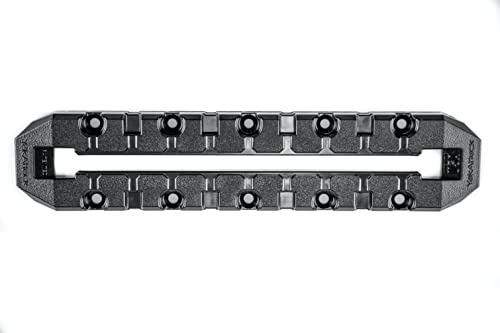
YakAttack GridLoc MightyMount XL, 9 inch
$15.95A short track section for a single accessory, which is the cheap way to add one mounting point without a full rail.
Best for: Mounting one fish finder or one rod holder to start
Check price on AmazonIntermediate: a real rigging platform
Longer track, better trolley hardware and a proper tackle crate turn a bare hull into something that actually functions as a fishing platform for a full day.
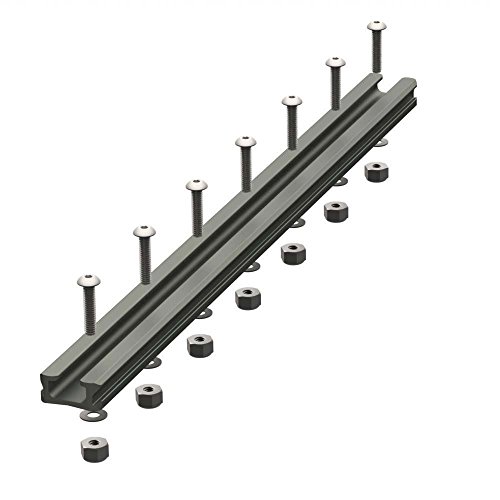
YakAttack GT90 GearTrac, 12 inch aluminium
$29.99The long track, which is what you want on the gunwale where several accessories need to share a single rail.
Best for: Rigging a gunwale with more than one accessory
Check price on Amazon
YakAttack BlackPak Pro 13 x 13 fishing crate with 3 rod holders
$129.95The crate the whole category copies, and the rod holders are part of the structure rather than clipped on.
Best for: Tackle storage plus three rod holders in one purchase
Check price on AmazonExpert: standing to cast and carrying more rods
A larger crate with more rod holders and a stabilizer for standing to cast are the last real upgrades this category offers before the boat itself needs to change.

YakAttack BlackPak Pro 16 x 16 fishing crate with 6 rod holders
$179.95Six rod holders and a bigger footprint, for anyone carrying multiple rigged rods rather than two.
Best for: Carrying several pre-rigged rods for different presentations
Check price on Amazon
Spring Creek Manufacturing hydrodynamic canoe stabilizer float package
$395.00Rigid molded floats on a proper crossbar, which is a genuinely different thing to an inflatable tube on a bent aluminum arm.
Check before buying: Outriggers change how the hull behaves in waves and in current. Practise somewhere shallow and sheltered before relying on them.
Best for: Standing to cast, or a canoe that needs to be genuinely stable
Check price on AmazonWho should not buy this tier: A kayak angler who paddles calm ponds and never needs to stand and cast, where a stabilizer's extra width and weight are dead cargo for every paddle stroke.
Getting the kayak to the water
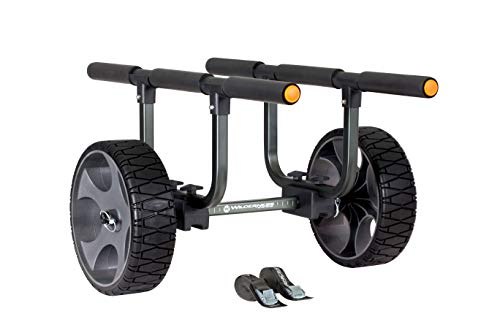
Wilderness Systems heavy duty kayak cart with flat-free wheels
$189.99Rated to 450 lb with solid wheels, which is what a loaded pedal kayak actually weighs and what a cheap cart fails under.
Best for: Moving a pedal kayak alone
Check price on Amazon
Suspenz All-Terrain kayak cart with airless wheels
$199.95Folds down small enough to ride in the tankwell, which is the thing that decides whether a cart gets used or left in the truck.
Check price on AmazonHow we chose this rigging
We compared manufacturer published track dimensions, hardware compatibility and stated load ratings against verified owner reviews for cracking, corrosion and hardware failure complaints. Nobody here rigged and fished these exact setups to produce this list. Where a load rating was not published, this page did not estimate one.
How we chose
We did not test this equipment in person and we never claim to. Picks are researched from manufacturer specification sheets, published engineering and regulatory figures, and the recurring themes in verified owner reviews. Every pick is matched to a real thrust rating, a real published amp draw, a real capacity or a real conductor size rather than to a price bracket, and it is placed in the tier where its published capability actually belongs. We rejected the unbranded flood that dominates several of these search results, because a lithium pack whose management board is the only thing between a cell fault and a fire, a breaker protecting a battery cable, a life jacket and a bracket holding a two thousand dollar motor to the bow at highway speed are all parts whose failure has a consequence nobody can walk away from. Where a figure is convention rather than a published standard we label it that way, and where a manufacturer does not publish a figure we leave it out instead of estimating it.
Frequently asked questions
What is the point of installing track before buying accessories?
Track gives every future accessory a slide-and-lock mounting point instead of a hole drilled through the deck in one permanent spot. Most anglers change their mind about exactly where a rod holder, a fish finder arm or a camera mount should sit after fishing from the kayak a few times, and track lets that position move without a new hole. Installing track first avoids committing to a layout before you actually know what works.
How does an anchor trolley change how the kayak sits at anchor?
Anchoring from a single fixed bow point lets wind or current swing the kayak broadside, which is uncomfortable and can be unsafe in real chop. An anchor trolley runs the anchor line through a ring that slides along a track from bow to stern, so the paddler can move the effective anchor point and let the hull settle bow or stern into the wind or current instead of sitting sideways to it.
What is the difference between GT90 track and top loading track?
GT90 GearTrac is a surface mount track that needs backing hardware installed from inside the hull, accessed through a storage hatch, and accessories slide in from one end of the rail. Top loading track like the GTTL175 skips the inside hull access requirement entirely, since accessories drop straight into the track from above, which matters on hulls where reaching the backside of the deck is difficult or impossible.
Do I need a stabilizer to stand and cast from a kayak?
It depends on the hull. Some fishing kayaks are already stable enough to stand in calm water without added floats, while narrower or less stable hulls benefit from a stabilizer with rigid molded floats on a crossbar. A stabilizer changes how the hull behaves in waves and current, so practicing in shallow, sheltered water before relying on it for standing to cast is worth doing before a real trip.
How many rod holders does a rigged kayak actually need?
Two flush mounted or track mounted rod holders cover most anglers running one active rod and one backup rigged with a different presentation. Anglers who commit to multiple pre-rigged setups for different conditions, or who fish tournaments where switching techniques quickly matters, tend to add a crate with four to six holders instead of relying on a couple of individual track mounted holders scattered around the deck.
Is a kayak cart worth the money?
Yes for most anglers, particularly with a pedal drive kayak that can weigh well over a hundred pounds loaded with gear. A cart rated for the kayak's actual loaded weight, not just the hull's empty weight, turns a two person carry into a solo job. The main tradeoff is storage space in the vehicle, which is why carts that fold flat or fit in a kayak's own tankwell get used more than bulkier ones that end up left behind.
Get the complete rigging shopping list
Every item in the beginner, intermediate and expert rigs for both a boat and a kayak, with running totals, in one printable list. No charge.
One list, no sequence of daily emails, and you can leave at any time.
Researched, not professional advice. This page is compiled from published engineering and regulatory figures, manufacturer specifications and owner-review consensus, not hands-on testing. Figures described as a rule of thumb are boating convention rather than published standards, and they are labelled that way wherever they appear. Marine electrical work is not house wiring. Use tinned, finely stranded marine cable, size it for voltage drop and for the ABYC E-11 ampacity table rather than one or the other, and put overcurrent protection within seven inches of the battery positive terminal, because everything between the post and the fuse is unprotected. A lithium battery needs a charger with a lithium profile. Never load a boat past its capacity plate, and remember that canoes and kayaks carry no federal capacity plate at all, so their stated capacity is the manufacturer own figure. Wear the life jacket, and treat early season water as the hazard it is: cold water immersion takes your breath and then your hands long before it takes your core.