Bilge and pumps
Which bilge pump actually keeps your boat dry?
Quick answer
A bilge pump is rated in gallons per hour at zero head, and output drops as the pump lifts water higher, so a boat's real pumping capacity is always less than the number on the box. An 1,100 GPH pump with an automatic float switch covers most small to mid size fishing boats with margin for a real leak.
A bilge pump is the piece of equipment nobody thinks about until the day it actually matters, and by then it is either wired correctly and rated for the job or it is not. Every GPH figure printed on a bilge pump box is measured at zero head, meaning the pump discharging at the same height it sits, and real installations always lift water some distance up and out through a thru-hull fitting, so the honest output on your boat is lower than the number on the label.
The second half of the equation is how the pump knows to turn on. A mechanical float switch is simple and cheap, and it is also the part most likely to jam under a stray lure box lid or a wad of leaves in the bilge. Electronic sensing removes that mechanical failure point by detecting water directly rather than relying on a float arm to physically rise.
The pumps below were researched against manufacturer published GPH, voltage and switching method, and checked against verified owner reviews for reliability and airlock complaints. Nobody here ran these pumps through a season on the water to produce this list.
On this page
- Manual or automatic: which bilge pump do you need?
- How do published GPH figures compare across these pumps?
- Float switch or electronic sensing: what fails first?
- Beginner: a working automatic system built from two parts
- Intermediate: remove the mechanical failure point
- Expert: redundant pumping for real peace of mind
- How we chose these pumps
Manual or automatic: which bilge pump do you need?
A manual bilge pump runs only when a switch on the dash is thrown, which works fine on a boat that is never left unattended in the water and is checked every time somebody steps aboard. An automatic pump turns itself on when water reaches a set level, which matters on any boat left on a mooring, a lift, or a trailer in the rain where nobody is aboard to notice rising water. Most boats that leave the ramp end up wanting an automatic pump as the primary and a manual override switch as a backup.
How do published GPH figures compare across these pumps?
The pumps on this page range from 750 to 1,100 GPH at zero head, and every rating drops once the pump has to actually lift water any real distance to a discharge fitting.
Published figure A published engineering, regulatory or manufacturer figure. It does not change because somebody disagrees with it.
| Pump | GPH at zero head | Switching |
|---|---|---|
| Rule 27DA | 1,100 GPH | Manual only |
| Rule RM1100B | 1,100 GPH | Automatic, electronic sensing |
| SEAFLO 06 Series | 750 GPH | Automatic, float switch |
GPH at zero head is the manufacturer's own published maximum with no lift or discharge restriction. Real installed output is always lower once the pump has to push water up and out through a thru-hull.
Float switch or electronic sensing: what fails first?
A mechanical float switch, like the Rule 35A, works by physically rising with the water level until it trips a contact, and that same mechanical arm can be pinned down or jammed by whatever slides into the bilge under way. An electronic sensing pump, like the Rule RM1100B, detects water directly against a sensor with no moving float arm to jam, and it includes a backup timer that cycles the pump periodically even if the sensor itself gets fouled. Neither approach is foolproof, but removing a moving mechanical part removes one entire category of failure.
Beginner: a working automatic system built from two parts
An integrated pump and switch in one housing is the cheapest way to get automatic operation, and it removes the wiring step that most first installs get wrong.

SEAFLO 06 Series automatic submersible bilge pump, 750 GPH
$24.99 Published specsPump and switch in one unit backed by a four year warranty, at the price of a switch alone from the premium brands.
Best for: A first automatic pump on a budget
Check price on AmazonIntermediate: remove the mechanical failure point
Electronic sensing removes the one part of a bilge system most likely to jam, and it is worth the step up on any boat that spends real time on a mooring or a lift unattended.

Rule RM1100B auto submersible bilge pump with AutoSense
$120.53 Published specsSenses water electronically rather than with a float, which removes the mechanical part that jams under whatever slides into the bilge.
Best for: A boat left in the water or on a mooring
Check price on Amazon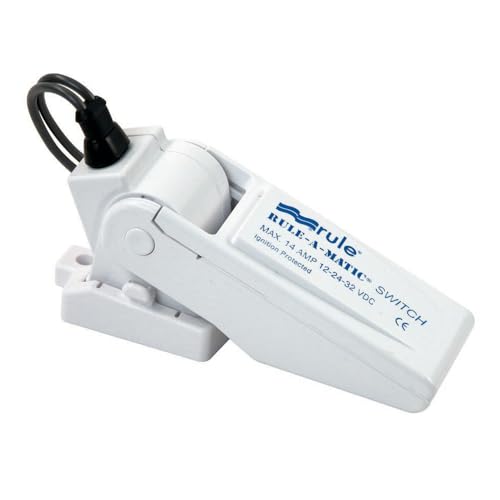
Rule 35A Rule-A-Matic bilge pump float switch
$42.09Mercury free and the standard float switch on most factory boats, which makes replacing one a like for like job as a manual backup.
Best for: Wiring a manual pump into an automatic system, or a backup switch
Check price on AmazonExpert: redundant pumping for real peace of mind
Running two pumps at different heights inside the bilge means a single pump failure, a clogged strainer or a stuck switch does not leave the boat with zero pumping capacity.

Rule 27DA standard bilge pump, 1100 GPH
$62.95 Published specsThe second pump, mounted higher in the bilge on its own switch, so it only ever runs when the primary has failed or been overwhelmed.
Best for: The high mounted backup in a two pump redundant setup
Check price on Amazon
Rule 40A bilge pump float switch with impact resistant cover
$54.00An impact resistant cover stops the switch being pinned up or down by whatever debris slides into the bilge under way.
Best for: A backup pump's switch, mounted higher as a second line of defense
Check price on AmazonWho should not buy this tier: A trailered boat checked before every trip and stored dry between outings, where a single reliable pump and switch already cover the realistic risk.
How we chose these pumps
We compared manufacturer published GPH at zero head, voltage and switching method against verified owner reviews looking for repeated airlock, thermal shutdown or switch jamming complaints. Nobody here ran these pumps through a season on the water to produce this list. Where a manufacturer did not publish a real world lift performance figure, this page did not estimate one.
How we chose
We did not test this equipment in person and we never claim to. Picks are researched from manufacturer specification sheets, published engineering and regulatory figures, and the recurring themes in verified owner reviews. Every pick is matched to a real thrust rating, a real published amp draw, a real capacity or a real conductor size rather than to a price bracket, and it is placed in the tier where its published capability actually belongs. We rejected the unbranded flood that dominates several of these search results, because a lithium pack whose management board is the only thing between a cell fault and a fire, a breaker protecting a battery cable, a life jacket and a bracket holding a two thousand dollar motor to the bow at highway speed are all parts whose failure has a consequence nobody can walk away from. Where a figure is convention rather than a published standard we label it that way, and where a manufacturer does not publish a figure we leave it out instead of estimating it.
Frequently asked questions
What does GPH at zero head actually mean?
Zero head means the pump is measured discharging water at the same height it sits, with no vertical lift and no hose restricting flow. Every real installation lifts water some distance up through the hull and pushes it through a length of hose, both of which reduce actual output below the number printed on the box. Treat the published GPH as a ceiling, not the flow rate you will actually get installed.
Should I buy a manual or automatic bilge pump?
A manual pump works fine on a boat that is never left unattended in the water, since somebody aboard can throw the switch. An automatic pump matters on any boat left on a mooring, a lift, or a trailer where rain or a slow leak could raise water level with nobody there to notice. Most boat owners end up wanting an automatic primary pump with a manual override switch as backup.
Which fails less, a float switch or electronic sensing?
A mechanical float switch has a moving arm that can be physically pinned or jammed by debris in the bilge, which is its one real weak point. Electronic sensing detects water directly with no moving float arm, removing that specific failure mode, and units like the Rule RM1100B add a backup timer that cycles the pump periodically even if the sensor itself gets fouled by growth or debris.
Should the bilge pump wire through the main battery switch?
No. An automatic bilge pump circuit should run directly to the battery through its own dedicated fuse, ahead of the main battery disconnect switch, so the pump keeps working if the main switch gets turned off while the boat is docked or trailered. Wiring it through the main switch defeats the purpose of an automatic pump during exactly the unattended situations it exists for.
How many bilge pumps does a boat actually need?
One properly sized, properly wired pump covers most small to mid size fishing boats for normal seepage and rain. A second pump mounted higher in the bilge as a backup adds real redundancy for anyone who leaves the boat on a mooring or a lift unattended for long stretches, since it keeps pumping capacity available if the primary pump or its switch fails.
How often should I actually test the bilge pump?
Test the pump and its switch before every trip that involves leaving the boat unattended on the water, and at minimum once at the start of each season after winter storage. Pour a small amount of water into the bilge and confirm the automatic switch trips the pump on its own, rather than only checking that the pump runs when manually switched, since the switch is the part most likely to have failed quietly.
Get the complete rigging shopping list
Every item in the beginner, intermediate and expert rigs for both a boat and a kayak, with running totals, in one printable list. No charge.
One list, no sequence of daily emails, and you can leave at any time.
Researched, not professional advice. This page is compiled from published engineering and regulatory figures, manufacturer specifications and owner-review consensus, not hands-on testing. Figures described as a rule of thumb are boating convention rather than published standards, and they are labelled that way wherever they appear. Marine electrical work is not house wiring. Use tinned, finely stranded marine cable, size it for voltage drop and for the ABYC E-11 ampacity table rather than one or the other, and put overcurrent protection within seven inches of the battery positive terminal, because everything between the post and the fuse is unprotected. A lithium battery needs a charger with a lithium profile. Never load a boat past its capacity plate, and remember that canoes and kayaks carry no federal capacity plate at all, so their stated capacity is the manufacturer own figure. Wear the life jacket, and treat early season water as the hazard it is: cold water immersion takes your breath and then your hands long before it takes your core.