Kayaks
Which fishing kayak should you actually buy?
Quick answer
The Perception Pescador Pro 12 is the best all-around fishing kayak for most anglers, a twelve foot sit-on-top under $1,000 that tracks well loaded with gear. Budget shoppers should start with the Pelican Catch Classic 120, and anyone who wants to stand and cast should look at the Wilderness Systems Recon 120.
A fishing kayak is a hull, a seat and however much rigging you bolt to it afterward, and the hull is the one decision you cannot undo cheaply. Buy too small and every trip feels like a compromise. Buy a heavy premium hull before you know whether kayak fishing is actually for you, and it sits in the garage.
This roundup is built from published manufacturer specifications, verified owner reviews and the prices the catalog carries right now, not a day on the water with each hull. We compared stated capacity, hull width, seat type and drive option across every genuine fishing kayak sold here, and priced them so a first purchase and a serious upgrade are not competing against each other.
On this page
- How we chose these fishing kayaks
- Best fishing kayaks for beginners
- Best fishing kayaks for committed anglers
- Best fishing kayaks for expert anglers
- How much weight can a fishing kayak actually carry
- Paddle or pedal, and does it matter this early
- What actually decides which fishing kayak is right for you
How we chose these fishing kayaks
We did not paddle each hull. What we did was read every manufacturer's own published length, hull type and stated capacity, cross-check the price against what the catalog carries today, and weigh that against verified owner reviews for known problems: seats that sag, hatches that leak, hulls that porpoise when loaded. A hull's stated capacity is the manufacturer's own figure rather than a regulated one, and we say so below rather than treating it as gospel.
Best fishing kayaks for beginners
The goal at this tier is the lowest total cost to a working setup: a stable hull, a seat that will not wreck an afternoon, and enough storage for a tackle box and a couple of rods. Nothing here needs a truck bed liner or a second mortgage.

Pelican Catch Classic 120 sit-on-top fishing kayak
$699.99 Published specsTwelve feet of flat-bottomed, sit-on-top stability for under $700, with four flush mount rod holders and rigging track already molded in.
Best for: A first fishing kayak that still has room to grow into
Check price on Amazon
Lifetime Muskie Angler sit-on-top kayak, 120 inch
$499.99 Published specsThe cheapest genuine fishing kayak in this catalog, with a paddle included, which matters if the honest question is whether you will use this at all.
Best for: Finding out whether kayak fishing is for you before spending real money
Check price on AmazonBest fishing kayaks for committed anglers
This is the buy-once tier: a hull that will not be the reason a serious angler upgrades again in a year. A frame seat that lifts you off the deck is the single feature that changes a long day the most, and every pick here has one.
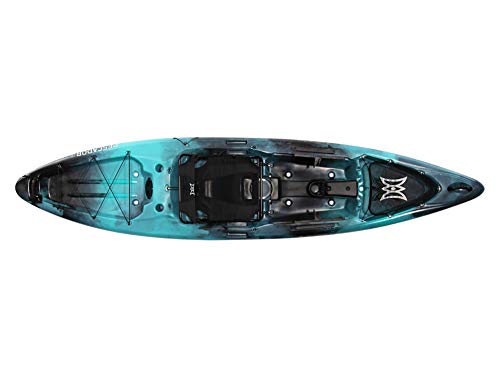
Perception Pescador Pro 12 sit-on-top fishing kayak
$999.00 Published specsThe lawn chair style frame seat and a hull that tracks straighter than the ten foot version, on anything bigger than a farm pond.
Best for: The buy-once paddle fishing kayak
Check price on Amazon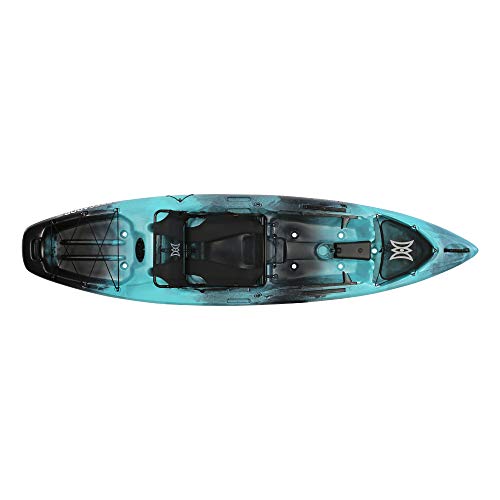
Perception Pescador Pro 10 sit-on-top fishing kayak
$898.00 Published specsThe same seat and build quality in a shorter, lighter hull for anyone who car tops alone or fishes tighter water.
Best for: Solo transport and narrow creeks
Check price on AmazonBest fishing kayaks for expert anglers
The last tier optimizes for performance ceiling rather than value: a hull built around standing to sight-cast, or hands-free pedal propulsion so both hands stay on the rod. You pay for it, and the tradeoff is real weight to car top or trailer.

Wilderness Systems Recon 120 sit-on-top fishing kayak
$1,619.00 Published specsA premium AirPro ACES seat and a hull built around standing rather than sitting, from the maker most serious paddle anglers end up buying from.
Best for: Sight casting and standing all day
Check price on Amazon
Old Town Sportsman PDL 120 pedal fishing kayak
$2,999.99A forward and reverse pedal drive that reverses at the pedals themselves, which matters the moment a fish runs under the hull.
Best for: Hands-free propulsion on a hull large enough to carry real gear
Check price on AmazonWho should not buy this tier: A first kayak budget, or anyone who mostly fishes small ponds and short outings where a hands-free pedal drive or a standing-optimized hull mostly goes unused. Buy Beginner or Intermediate first and find out whether you fish often enough to justify either upgrade.
How much weight can a fishing kayak actually carry
Every kayak here prints a maximum capacity, and the number that matters more is the one nobody prints: the load at which the hull still paddles, tracks and has usable freeboard rather than merely floats. Paddling convention treats roughly 70 percent of the manufacturer's stated maximum as that practical working load, and the table below applies that convention to the published capacity of every model in this roundup that states one.
Loading a kayak to about 70 percent of its manufacturer stated maximum, not the full number, is the working load paddling convention treats as realistic once a paddler, a seat, rods and a tackle box are aboard.
Rule of thumb Boating and fishing convention rather than a published standard. Taught everywhere, useful, and not a specification. Nothing enforces it and no body publishes it.
| Kayak | Stated maximum capacity | Working load at 70 percent |
|---|---|---|
| Perception Pescador Pro 10 | 325 lb | 228 lb |
| Perception Pescador Pro 12 | 375 lb | 263 lb |
| Perception Outlaw 11.5 | 425 lb | 298 lb |
| Old Town Sportsman PDL 106 | 450 lb | 315 lb |
| Old Town Sportsman PDL 120 | 500 lb | 350 lb |
| Old Town Sportsman BigWater PDL 132 | 500 lb | 350 lb |
Stated maximum capacity is each manufacturer own published figure. The 70 percent working load is convention, not a spec, and both numbers come from the listing rather than any independent test.
Paddle or pedal, and does it matter this early
A paddle kayak is lighter, cheaper, simpler to maintain and easier for one person to load onto a roof rack alone. A pedal kayak trades all of that for hands-free propulsion, which is worth real money to somebody who fishes several hours at a stretch, but it is not worth buying before you know you will use it. Every Beginner and Intermediate pick above is a paddle hull for exactly that reason. If pedal propulsion still sounds right after a season on a paddle kayak, the Old Town Sportsman PDL 120 is the upgrade most owners say they should have bought the second time around.
Two well-known names are deliberately absent from every pick above. Hobie kayaks, built around the MirageDrive fin pedal system, and Bonafide kayaks are not sold through Amazon at all, so neither can be linked or priced honestly here. Both are real, well regarded brands. Buy them direct from a dealer if the fin-drive pedal system or a Bonafide hull specifically is what you are after; this roundup only covers what can be verified and priced through the same catalog every other page on this site uses.
What actually decides which fishing kayak is right for you
Length decides tracking and storage before anything else does: a ten foot hull turns faster in tight water and a twelve foot hull holds a straighter line and more gear on open water. Hull width decides stability, and a wider hull that stands more forgivingly also paddles slower, which is the tradeoff every stand-up fishing kayak makes on purpose. Seat quality decides how long you actually stay out, and a frame seat that lifts you off the deck is worth more to most anglers than another rod holder ever will be.
Rigging comes last, on purpose, because it bolts onto any hull afterward. Aluminium track, an anchor trolley and a proper crate can turn a $500 hull into a genuinely capable fishing platform. They cannot fix a hull that is too narrow to fish comfortably or too short to hold your gear, so spend the first dollars on the hull and the rest on the rigging.
How we chose
We did not test this equipment in person and we never claim to. Picks are researched from manufacturer specification sheets, published engineering and regulatory figures, and the recurring themes in verified owner reviews. Every pick is matched to a real thrust rating, a real published amp draw, a real capacity or a real conductor size rather than to a price bracket, and it is placed in the tier where its published capability actually belongs. We rejected the unbranded flood that dominates several of these search results, because a lithium pack whose management board is the only thing between a cell fault and a fire, a breaker protecting a battery cable, a life jacket and a bracket holding a two thousand dollar motor to the bow at highway speed are all parts whose failure has a consequence nobody can walk away from. Where a figure is convention rather than a published standard we label it that way, and where a manufacturer does not publish a figure we leave it out instead of estimating it.
Frequently asked questions
Do fishing kayaks have a Coast Guard capacity plate like a boat does?
No. Federal capacity plate rules apply to monohull boats under twenty feet that are propelled by machinery, and canoes and kayaks are specifically not covered by that requirement. A fishing kayak's stated maximum capacity is the manufacturer's own published figure, measured however that manufacturer chooses to measure it, rather than a number any regulator checks or enforces. Treat it as a useful data point, not a certified rating.
How much weight should I actually plan to load in a fishing kayak?
Plan around 70 percent of the manufacturer's stated maximum capacity rather than the full number. That figure is paddling convention, not a published standard, but it is repeated across the community because a kayak loaded to its stated maximum typically floats rather than paddles well: freeboard drops, tracking suffers and stability falls off in any chop.
Should I buy a paddle kayak or a pedal kayak first?
Buy a paddle kayak first unless you already know you will fish long enough sessions that hands-free propulsion pays for itself. Paddle hulls cost roughly half as much, weigh far less to car top alone, and let you find out whether kayak fishing suits you before spending pedal-drive money. Most pedal drive owners in this catalog started on a paddle hull and upgraded once they knew.
What is the real difference between a $500 kayak and a $2,000 kayak?
Mostly the seat, the hull's stability under load and how it tracks once loaded with gear, not raw durability. A $500 hull like the Lifetime Muskie Angler gets you on the water and fishing. A $2,000 hull like the Wilderness Systems Recon 120 adds a premium adjustable seat, a hull tuned for standing to cast, and a build that holds resale value years later.
Can I add a trolling motor to a paddle kayak later?
Yes, with a motor mount, a battery and wiring rated for the load, and it is a genuinely common upgrade path. The Old Town Sportsman 106 Powered by Minn Kota ships with the motor already integrated if you would rather buy that setup solved from the factory instead of engineering it onto a paddle hull yourself.
Are Hobie kayaks better than the pedal kayaks in this roundup?
Hobie's MirageDrive uses a fin-based pedal system rather than the propeller drives on every pedal kayak in this catalog, and Bonafide builds well regarded rotomolded hulls too. Neither brand sells through Amazon, so neither can be verified, priced or linked honestly on this site. That is an availability gap, not a verdict on quality: buy either one direct from a dealer if that specific drive system is what you want.
Get the complete rigging shopping list
Every item in the beginner, intermediate and expert rigs for both a boat and a kayak, with running totals, in one printable list. No charge.
One list, no sequence of daily emails, and you can leave at any time.
Researched, not professional advice. This page is compiled from published engineering and regulatory figures, manufacturer specifications and owner-review consensus, not hands-on testing. Figures described as a rule of thumb are boating convention rather than published standards, and they are labelled that way wherever they appear. Marine electrical work is not house wiring. Use tinned, finely stranded marine cable, size it for voltage drop and for the ABYC E-11 ampacity table rather than one or the other, and put overcurrent protection within seven inches of the battery positive terminal, because everything between the post and the fuse is unprotected. A lithium battery needs a charger with a lithium profile. Never load a boat past its capacity plate, and remember that canoes and kayaks carry no federal capacity plate at all, so their stated capacity is the manufacturer own figure. Wear the life jacket, and treat early season water as the hazard it is: cold water immersion takes your breath and then your hands long before it takes your core.