Life jackets
Which life jacket should you actually wear fishing?
Quick answer
In early season the real hazard is cold water immersion, not depth. It takes the breath first and the hands second, long before it reaches the core. Only Coast Guard approved life jackets are worth considering, and an automatic inflatable is not appropriate for kayaking where you expect to end up in the water.
A life jacket is the one piece of equipment on this site whose entire job is to work on the worst day, the day everything else already went wrong. Only Coast Guard approved units are worth considering for that reason, and this catalog does not carry anything that is not USCG approved. Everything else, from mesh backs that clear a kayak seat to pockets sized for pliers, is comfort that decides whether you actually wear it, not whether it works when it matters.
In early season, the hazard that kills anglers is not depth. It is cold water immersion, and it works faster than most people expect. Cold water takes the breath first, triggering an involuntary gasp reflex that can pull water into the lungs on first entry, then takes the hands second as grip strength fails within minutes, long before hypothermia ever reaches the core. A life jacket that is worn, not stowed under a seat, is what buys the time a swimmer needs through that first minute.
An inflatable life jacket depends on two things staying ready: a charged CO2 cylinder and a water sensitive bobbin, and both need checking every season. An automatic inflatable is not appropriate for kayaking, where flipping and going in the water on purpose or by accident is a normal part of the sport rather than an emergency, and firing the inflation chamber every time that happens is neither convenient nor safe in moving water.
On this page
- Why does cold water matter more than depth in early season?
- Foam or inflatable: what does the buoyancy number actually mean?
- What actually needs checking on an inflatable life jacket?
- Beginner: legal, approved and inexpensive
- Intermediate: built for actually wearing it all day
- Expert: all day comfort in the heat
- Built around a kayak seat
- How we chose these life jackets
Why does cold water matter more than depth in early season?
Cold water immersion works in a predictable, dangerous sequence. The first shock of cold water triggers an involuntary gasp reflex within seconds, which is how swimmers without a life jacket inhale water and drown in the first minute even in water they could easily swim in if warm. Grip strength and fine motor control in the hands fail within a few minutes after that, well before the core body temperature has dropped enough to cause hypothermia. A life jacket worn before entering the water, not one located and put on after falling in, is what survives that sequence.
Depth is not the variable that determines survival here. A life jacket does the same job in three feet of cold water as in thirty, because the danger is losing the ability to keep your own head above water long enough for help to arrive or for a swim to shore, not the distance to the bottom.
Foam or inflatable: what does the buoyancy number actually mean?
Published buoyancy ranges from about 16 pounds in a foam Type III vest up to 40 pounds in an offshore inflatable, and every figure here is the maker's own stated design buoyancy.
Published figure A published engineering, regulatory or manufacturer figure. It does not change because somebody disagrees with it.
| Life jacket | Type | Published buoyancy |
|---|---|---|
| Stohlquist Fisherman | Foam, Type III | 16 lb 4 oz |
| Astral V-Eight Fisher | Foam, Type III | 16 lb design |
| Onyx A/M-24 | Inflatable, Type V | 22.5 lb inflated |
| BLUESTORM Cirro 26 | Inflatable, Type V | 26 lb inflated |
| BLUESTORM Arcus 40 | Inflatable, Type II | 40 lb inflated |
Every buoyancy figure above is the manufacturer's own published design buoyancy for that model, not an independently tested figure.
What actually needs checking on an inflatable life jacket?
An inflatable life jacket relies on a CO2 cylinder to fire the inflation chamber and a water sensitive bobbin that dissolves or triggers on contact with water to release the firing pin. Both are consumable, both degrade, and both need a visual check at the start of a season: confirming the cylinder is full weight and not corroded, and confirming the bobbin has not expired or already partially dissolved from humidity. A rearm kit replaces both parts after any inflation, whether that inflation was intentional, accidental, or just a test.
None of this applies to a foam Type III vest, which has no consumable parts and works the moment it is on, which is exactly why a foam vest remains the right choice for kayak fishing, wading, or any activity where getting wet on purpose is part of a normal day rather than an emergency.
Beginner: legal, approved and inexpensive
Every boat needs approved spare vests for passengers regardless of what the primary angler wears, and a beginner buying a first vest does not need the ventilation or pocket layout of a dedicated fishing design yet.
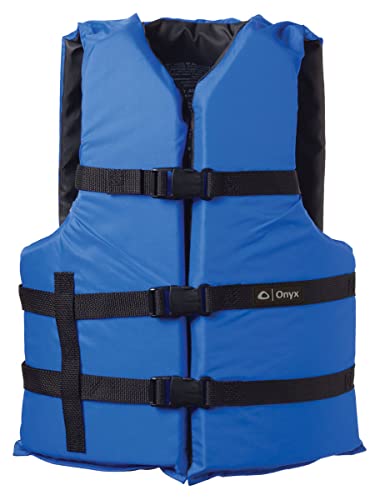
Onyx general purpose boating life jacket
$24.88Under twenty five dollars, which is the right price for the spare vests every boat is required to carry for its passengers.
Best for: The spare vests the boat has to carry anyway
Check price on Amazon
Stohlquist adult Type III life jacket, 4 pack, USCG approved
$169.99Four approved vests in one purchase, which is how a boat gets legal for a full crew without four separate decisions.
Best for: Outfitting a full crew at once
Check price on AmazonIntermediate: built for actually wearing it all day
A vest that fights a kayak seat or a cast gets taken off, and a vest taken off does nothing. This tier is built specifically to still be on at the end of the day.

Onyx MoveVent Dynamic paddle vest, USCG approved
$80.28Mesh back so it clears a kayak seat, big arm openings so it does not fight a cast, and it carries Coast Guard approval.
Best for: Kayak fishing, where a standard vest sits on the seat back and rides up
Check price on Amazon
Onyx A/M-24 inflatable life jacket, automatic and manual, USCG approved
$107.99The most common approved auto inflating vest on the water, which means rearm kits are available nearly everywhere.
Check before buying: Automatic inflation is not appropriate for kayaking where you expect to be in the water. Check the cylinder and the bobbin date every season.
Best for: A vest you will genuinely wear all day on a powerboat
Check price on AmazonExpert: all day comfort in the heat
Ventilated back panels and offshore rated buoyancy are the last upgrade this category offers, aimed at anglers who fish long hours in heat or open water.

Astral V-Eight Fisher life jacket
$99.00A ventilated back panel done properly, and the vest people actually keep on all day instead of taking off in the heat.
Best for: Long, hot days where a standard foam vest gets shed by noon
Check price on Amazon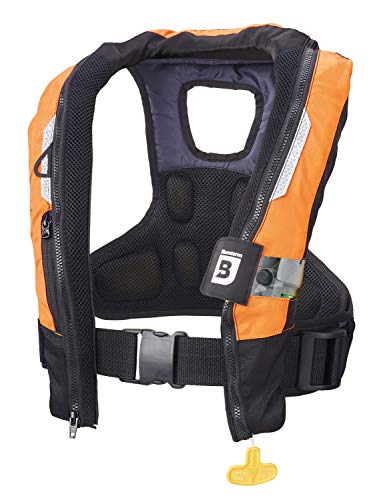
BLUESTORM Arcus 40 automatic inflatable PFD with manual ripcord, USCG approved
$179.99Forty pounds of published buoyancy, which is the offshore specification rather than the inland recreational one.
Best for: Offshore or rough water fishing beyond typical inland conditions
Check price on AmazonWho should not buy this tier: Casual lake fishing a mile from the ramp, where a basic Type III vest already does the job and the extra ventilation or offshore buoyancy goes unused.
Built around a kayak seat

Old Town Lure Angler II front-zip life jacket
$169.02Built by a kayak maker around a kayak seat specifically, which is a different design problem than building a vest for a powerboat.
Check price on Amazon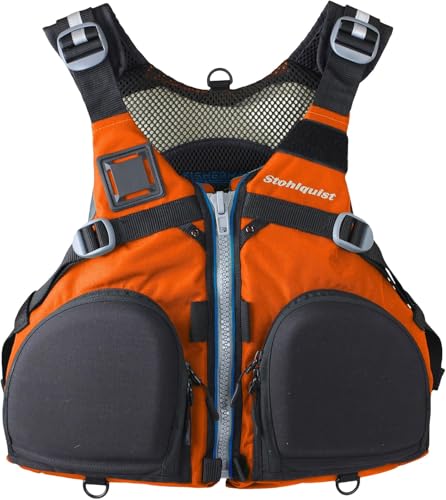
Stohlquist Fisherman life jacket
$123.40Front pockets sized for a small tackle box and pliers, so the vest replaces some of what would otherwise ride in the crate.
Check price on AmazonHow we chose these life jackets
Only Coast Guard approved units are catalogued here, and every one was compared on its own published buoyancy, type classification and inflation method against verified owner reviews for fit and comfort complaints. Nobody here wore these vests in a controlled test to produce this list. A published buoyancy figure is the manufacturer's own design number, not an independently verified measurement.
How we chose
We did not test this equipment in person and we never claim to. Picks are researched from manufacturer specification sheets, published engineering and regulatory figures, and the recurring themes in verified owner reviews. Every pick is matched to a real thrust rating, a real published amp draw, a real capacity or a real conductor size rather than to a price bracket, and it is placed in the tier where its published capability actually belongs. We rejected the unbranded flood that dominates several of these search results, because a lithium pack whose management board is the only thing between a cell fault and a fire, a breaker protecting a battery cable, a life jacket and a bracket holding a two thousand dollar motor to the bow at highway speed are all parts whose failure has a consequence nobody can walk away from. Where a figure is convention rather than a published standard we label it that way, and where a manufacturer does not publish a figure we leave it out instead of estimating it.
Sources
- USCG recreational boating safety guidance on Type classifications and cold water immersion stages
Frequently asked questions
Why is cold water more dangerous than deep water in early season?
Cold water immersion triggers an involuntary gasp reflex within seconds of entry, which can pull water directly into the lungs before a swimmer has any chance to control their breathing. Grip strength and fine motor control in the hands fail within a few minutes after that, well before hypothermia has time to reach the core. Depth is not the variable, since the same sequence happens in three feet of cold water as in thirty.
Is an automatic inflatable life jacket safe for kayak fishing?
No. Automatic inflation is not appropriate for kayaking, where capsizing or intentionally going into the water is a normal part of the activity rather than an emergency, and firing the inflation chamber every time that happens is neither practical nor safe, particularly in moving water. A foam Type III vest, or an inflatable set to manual only mode, is the appropriate choice for kayak fishing.
What is a water sensitive bobbin and why does it matter?
A water sensitive bobbin is the small component inside an inflatable life jacket that dissolves or triggers on contact with water, releasing the firing pin that punctures the CO2 cylinder. It degrades over time from humidity and needs a seasonal visual check alongside the cylinder itself. A jacket with an expired or already compromised bobbin may not inflate automatically when it matters most.
How much buoyancy do I actually need in a life jacket?
Published buoyancy on the life jackets covered here ranges from about 16 pounds in a standard foam Type III vest up to 40 pounds in an offshore rated inflatable Type II. A foam Type III vest's published buoyancy is adequate for typical inland recreational fishing, while the higher offshore ratings matter more for open water or commercial style use where rougher conditions and heavier gear are the norm.
Should I choose a foam vest or an inflatable for kayak fishing?
A foam Type III vest has no consumable parts, works the instant it is on, and handles unplanned water entry without needing to be reset or rearmed, which matches how often a kayak angler ends up wet on purpose or by accident. An inflatable set to manual only mode can work too, but it depends on a charged cylinder and an intact bobbin that both need checking every season.
How often should I check an inflatable life jacket?
Check the CO2 cylinder and the water sensitive bobbin at the start of every season, confirming the cylinder is full weight with no corrosion and the bobbin has not expired or partially dissolved from humidity. After any inflation, whether intentional, accidental, or a deliberate test, both parts need replacing with a manufacturer rearm kit before the jacket is trusted again.
Get the complete rigging shopping list
Every item in the beginner, intermediate and expert rigs for both a boat and a kayak, with running totals, in one printable list. No charge.
One list, no sequence of daily emails, and you can leave at any time.
Researched, not professional advice. This page is compiled from published engineering and regulatory figures, manufacturer specifications and owner-review consensus, not hands-on testing. Figures described as a rule of thumb are boating convention rather than published standards, and they are labelled that way wherever they appear. Marine electrical work is not house wiring. Use tinned, finely stranded marine cable, size it for voltage drop and for the ABYC E-11 ampacity table rather than one or the other, and put overcurrent protection within seven inches of the battery positive terminal, because everything between the post and the fuse is unprotected. A lithium battery needs a charger with a lithium profile. Never load a boat past its capacity plate, and remember that canoes and kayaks carry no federal capacity plate at all, so their stated capacity is the manufacturer own figure. Wear the life jacket, and treat early season water as the hazard it is: cold water immersion takes your breath and then your hands long before it takes your core.