Gift Guides
Gifts for a boat owner who already has the boat
Quick answer
A boat cover support pole under thirty five dollars stops rain pooling on the canvas top, which is the specific reason a cover tears, and almost nobody buys one until the first time it happens. Bigger gifts for a boat owner cluster around the electrical system: chargers, switches and the overcurrent protection that keeps a cable from overheating.
A boat owner already has the boat, the motor and probably a fish finder, which pushes the good gift ideas toward the systems underneath all of that: the battery, the wiring, the switch panel and the radio. None of these are exciting to shop for, which is exactly why they make good gifts. A boat owner rarely gets around to replacing a tired charger or adding a proper battery switch on their own initiative, even when they know it needs doing.
This guide runs the usual three tiers, and leans on one real engineering fact throughout: ABYC E-11 requires overcurrent protection within seven inches of the battery positive terminal, extended to forty inches inside a protective sheath. Several of the picks below exist specifically to meet that rule properly rather than with a fuse taped behind the console.
On this page
Beginner tier: under thirty dollars
Small, unglamorous purchases that fix a real and common problem on almost any boat.

Moeller injection molded marine battery box, Group 27, 30 or 31
$17.00Marine plastic that does not go brittle after two summers in the sun, and a battery secured properly is one less thing to think about at speed.
Best for: A battery still sitting loose or in a cracked old box
Check price on Amazon
Blue Sea Systems m-Series on/off battery switch
$27.05Isolates the battery with one turn, which is what lets someone work on the boat without pulling terminals off the posts by hand.
Best for: A boat with no way to isolate the battery except disconnecting cables
Check price on Amazon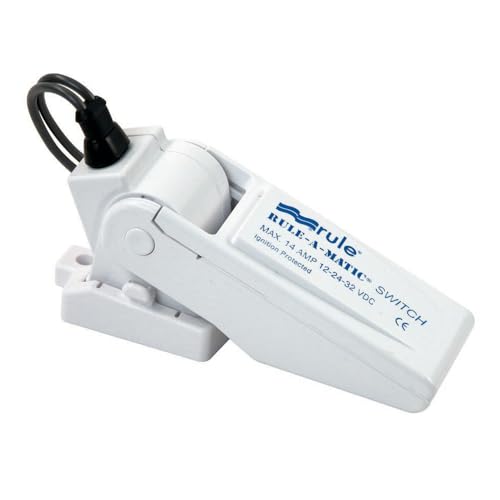
Rule 35A Rule-A-Matic bilge pump float switch
$42.09A mercury free float switch and the standard fit on most boats, which makes replacing a failing one a straightforward like for like job.
Best for: A bilge pump that only runs on the manual switch
Check price on AmazonIntermediate tier: the system upgrade
Real upgrades to the electrical system, and the kind of gift a boat owner notices every single time they charge the batteries or use the radio.
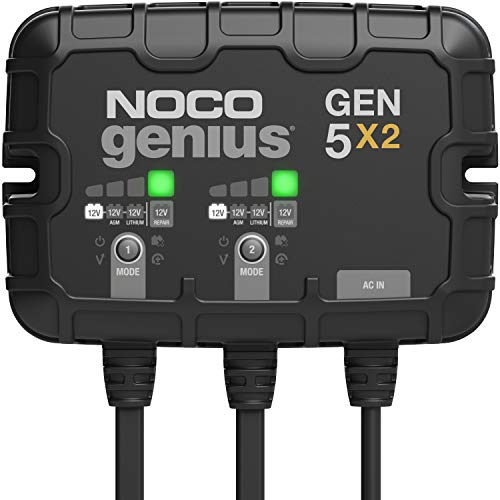
NOCO GEN5X2 12V 10A 2-bank onboard charger
$139.95 Published specsTwo banks with selectable charging modes for lead acid or lithium, and a genuine upgrade over a single old charger that treats every battery the same.
Best for: A twenty four volt bank still charging on a single old charger
Check price on Amazon
Blue Sea Systems Add-A-Battery kit, 120A
$175.34A switch and an automatic charging relay together, which charges a second battery from the outboard without ever letting the electronics flatten the cranking battery.
Best for: A boat with only one battery for both starting and everything else
Check price on Amazon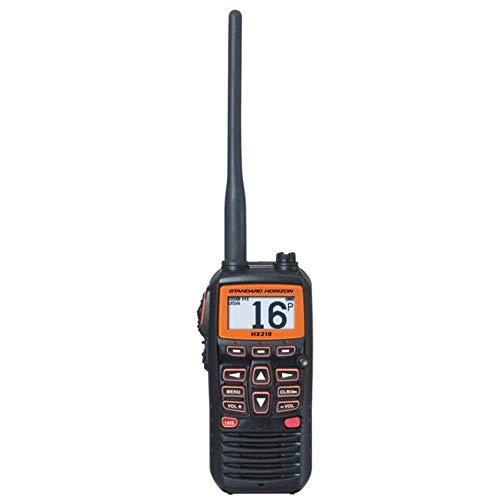
Standard Horizon HX210 6W floating handheld VHF
$114.25Six watts is the full legal handheld power rather than the three watts cheaper units put out, and it floats if it goes over the side.
Best for: A boat with no radio at all, or one running on a phone instead
Check price on AmazonExpert tier: the full network
These assume a boat that already has real electrical infrastructure in place, and reward it with a genuine upgrade rather than a first step.

ProMariner ProSport HD 20A 3-bank waterproof onboard charger
$250.73 Published specsTwenty amps across three banks in a genuinely waterproof case, which is the common upgrade when a thirty six volt bank outgrows a small charger.
Best for: A three battery bank still charging on a slow single bank charger
Check price on Amazon
Garmin GPS 24xd with heading sensor, NMEA 2000
$279.94Adds a heading sensor, which is what makes a chart hold its orientation when the boat is barely moving, on a NMEA 2000 network the boat already runs.
Best for: A boat already networked with NMEA 2000 but missing a dedicated heading sensor
Check price on AmazonWho should not buy this tier: A boat with a single small battery and no NMEA 2000 network already installed. These gifts assume infrastructure the boat already has, like a multi bank charger setup or a network to plug a heading sensor into, rather than being a reasonable starting point on their own.
Where overcurrent protection actually has to sit
Several of the picks above exist to satisfy one specific rule, and it is worth knowing before buying a fuse block or a battery switch as a gift.
ABYC E-11 requires overcurrent protection within seven inches of the battery positive terminal, extended to forty inches when the cable runs inside a protective sheath.
Published figure A published engineering, regulatory or manufacturer figure. It does not change because somebody disagrees with it.
| Cable run | Maximum unprotected length |
|---|---|
| Bare cable from the battery positive terminal | 7 inches |
| Cable protected inside a sheath | 40 inches |
Everything between the battery post and the first fuse or breaker is unprotected, which is why the distance is specified rather than left to judgment.
Gifts that miss for a boat owner
Skip a fixed mount VHF radio unless the boat already has, or the recipient is prepared to run, an antenna and a twelve volt feed, since a fixed radio without an install plan just sits in a box. Skip a lithium battery as a surprise gift unless a charger with a lithium profile is either already aboard or included with it, since a lead acid charger on a lithium pack either never fills it fully or holds it at a voltage the cells should not sit at. And skip anything that assumes a specific hull length or console layout without checking, since a battery box or a switch panel sized for the wrong space is dead weight in a locker.
How we chose
We did not test this equipment in person and we never claim to. Picks are researched from manufacturer specification sheets, published engineering and regulatory figures, and the recurring themes in verified owner reviews. Every pick is matched to a real thrust rating, a real published amp draw, a real capacity or a real conductor size rather than to a price bracket, and it is placed in the tier where its published capability actually belongs. We rejected the unbranded flood that dominates several of these search results, because a lithium pack whose management board is the only thing between a cell fault and a fire, a breaker protecting a battery cable, a life jacket and a bracket holding a two thousand dollar motor to the bow at highway speed are all parts whose failure has a consequence nobody can walk away from. Where a figure is convention rather than a published standard we label it that way, and where a manufacturer does not publish a figure we leave it out instead of estimating it.
Frequently asked questions
What is the single best gift for a boat owner?
A boat cover support pole is a strong, inexpensive pick because it prevents the specific failure mode that ends most canvas covers: rain pooling in a low spot until the weight eventually tears the fabric or floods the boat on the trailer. It costs well under fifty dollars, takes minutes to fit, and almost nobody buys one until after the first time a cover fails.
Is an onboard charger a good gift?
Yes, as long as the bank count matches the boat. A single bank charger suits a one battery boat, two banks suit a twenty four volt trolling motor bank plus a starting battery, and three or four banks suit a thirty six volt motor bank with a separate cranking battery. Buying the wrong bank count means banks either go uncharged or the charger is wasted capacity.
Why does a battery switch matter as a gift?
A battery switch lets someone isolate the battery with one turn instead of pulling cables off the posts by hand, which matters both for safety while working on the boat and for stopping a slow parasitic drain from flattening the battery between trips. It is inexpensive, installs in under an hour, and solves a problem most boat owners have simply learned to live with.
What does ABYC E-11 have to do with a fuse block gift?
ABYC E-11 specifies that overcurrent protection sits within seven inches of the battery positive terminal, extended to forty inches inside a protective sheath, because everything between the battery post and the first fuse or breaker is unprotected. A proper fuse block or breaker gift, installed close to the battery, is what actually satisfies that rule instead of an inline fuse taped somewhere convenient.
Is a VHF radio a better gift than relying on a phone?
A marine VHF reaches every boat within range and the Coast Guard at once on channel 16, and a DSC equipped model with a distress button sends a position with a single press, none of which a phone can do reliably on open water. A floating handheld VHF is the safer starting gift for a boat that currently has no radio at all.
How much should I spend on an electrical gift for a boat owner?
A genuinely useful gift starts under thirty dollars for something like a battery box or a switch, and the meaningful system upgrades, like a multi bank charger or an add-a-battery kit, run from about one hundred forty to two hundred fifty dollars. Past that, only buy for a boat whose network and bank configuration are already known well enough to guarantee it fits.
Get the complete rigging shopping list
Every item in the beginner, intermediate and expert rigs for both a boat and a kayak, with running totals, in one printable list. No charge.
One list, no sequence of daily emails, and you can leave at any time.
Researched, not professional advice. This page is compiled from published engineering and regulatory figures, manufacturer specifications and owner-review consensus, not hands-on testing. Figures described as a rule of thumb are boating convention rather than published standards, and they are labelled that way wherever they appear. Marine electrical work is not house wiring. Use tinned, finely stranded marine cable, size it for voltage drop and for the ABYC E-11 ampacity table rather than one or the other, and put overcurrent protection within seven inches of the battery positive terminal, because everything between the post and the fuse is unprotected. A lithium battery needs a charger with a lithium profile. Never load a boat past its capacity plate, and remember that canoes and kayaks carry no federal capacity plate at all, so their stated capacity is the manufacturer own figure. Wear the life jacket, and treat early season water as the hazard it is: cold water immersion takes your breath and then your hands long before it takes your core.