Batteries
Which marine battery box or tray should you buy?
Quick answer
The Attwood vented battery box includes a 40-inch hold-down strap rated to 350 lb, nearly four times the US Coast Guard requirement. A box or tray is required hardware under ABYC E-10.7 and USCG 183.420 regardless of whether the battery inside is AGM or lithium, since a battery that shifts in a seaway can short against nearby metal.
A battery that moves in a seaway is a genuine electrical hazard, not just a nuisance rattle. USCG 183.420 and ABYC E-10.7 both require a battery to be secured against movement in every direction, and a box, a tray with a strap, or a permanently mounted hold-down are the ways that requirement actually gets met on a small boat.
Vented and sealed are not interchangeable choices. A flooded lead acid battery produces hydrogen while charging and needs a vented box to release it, while a sealed AGM battery or a lithium pack in its own hard case does not have the same gassing concern, though it still needs to be held down under the same regulation.
Case dimensions, strap ratings and certifications below come from each product's own Amazon listing.
On this page
- How this list was put together
- What does ABYC actually require for a battery hold-down?
- Does a lithium battery still need a box or a tray?
- How do you actually know what a lithium pack has left?
- Does switching the box to lithium change anything about how the battery is charged?
- Best budget battery box
- Best battery tray for most boats
- Best battery monitor for lithium
How this list was put together
None of these boxes or trays were installed on a boat to confirm the manufacturer's claims. Every dimension, strap rating and certification below comes from each product's own listing, checked against the stated figures rather than assumed from a similar-looking model.
What does ABYC actually require for a battery hold-down?
The NOCO BT31S tray publishes a 42-inch strap rated over 120 kg and meets USCG 183.420 and ABYC E-10.7 by its own listing.
Published figure A published engineering, regulatory or manufacturer figure. It does not change because somebody disagrees with it.
| Product | Style | Group size fit | Published compliance or strap rating |
|---|---|---|---|
| Attwood vented battery box | Box with strap | Group 29/31 | 40-inch strap rated 350 lb, meets ABYC and USCG |
| NOCO BT31S | Tray with strap | Group 31 | 42-inch strap rated over 120 kg, meets USCG 183.420 and ABYC E-10.7 |
| T-H Marine holder tray | Tray with buckle | Group 31 | NMMA certified, stainless steel buckle |
| Attwood hold-down tray | Tray | Group 27/27M | USCG and ABYC compliant |
Group size describes case dimensions. Confirm the battery's own outside dimensions against the box or tray's inside dimensions before ordering, since Group 31 batteries from different makers are not all identical in height.
Does a lithium battery still need a box or a tray?
Yes. A hard plastic lithium case is not a substitute for a hold-down, and the same USCG and ABYC hold-down requirement applies to any battery regardless of chemistry. A LiFePO4 pack in a Group 24 or Group 31 footprint drops into the same trays built for lead acid of that size, so switching chemistry does not mean replacing the tray as well in most boats.
How do you actually know what a lithium pack has left?
A lithium pack's voltage barely moves across most of its usable capacity and then falls off sharply near empty, which makes a voltmeter a poor way to judge the remaining charge the way it works reasonably well on lead acid. The Victron Energy BMV-712 smart battery monitor with shunt counts amp hours in and out through a shunt instead of reading voltage, which is the only honest way to know what percentage of the pack is actually left.
Does switching the box to lithium change anything about how the battery is charged?
The box or tray itself does not care what chemistry sits inside it, but the charger wired to that battery does. Swapping a lead acid battery for a lithium pack of the same case size, without also confirming the onboard charger has a selectable lithium profile, leaves a correctly secured battery sitting on the wrong charge cycle. A lead acid profile either never reaches the bulk voltage a LiFePO4 pack needs to fill, or it holds the pack at a float voltage lithium cells should not sit at for long, so the box swap and the charger check should happen at the same time rather than one after the other.
The physical hardware in this section, the box, the tray, the strap and the hold-down bolts, is identical across chemistries because ABYC and USCG regulations do not distinguish between a lead acid case and a lithium case when it comes to securing the battery. What changes is entirely on the electrical side, in the charger and the monitor, not in the box that holds the battery still.
Best budget battery box
A flooded lead acid battery needs ventilation while charging, and a basic box with the strap included covers that at low cost.

Attwood vented battery box with mounting strap, Group 29 and 31
$24.19A vented box with the strap and hardware included, meeting ABYC and USCG requirements out of the container.
Best for: A flooded lead acid battery that needs ventilation while charging
Check price on AmazonBest battery tray for most boats
A tray with a strap works in compartments too tight or too oddly shaped for a full box to close over the battery.

T-H Marine battery holder tray with stainless buckle, Group 31
$19.99An NMMA certified tray with a stainless steel buckle instead of the plastic clip that fails first on cheaper trays.
Best for: A compartment where a full box would not close over the battery
Check price on Amazon
NOCO BT31S Group 31 heavy duty battery tray
$13.70A 42-inch strap rated over 120 kg of force, published to meet both USCG and ABYC specifications by its own listing.
Best for: A Group 31 battery in an open compartment
Check price on AmazonBest battery monitor for lithium
A shunt based monitor answers the one question a box or tray cannot: how much capacity is actually left in the pack.
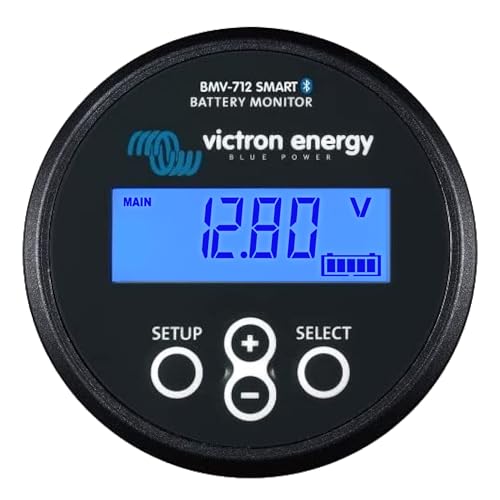
Victron Energy BMV-712 smart battery monitor with shunt
$131.09A shunt based monitor that reads actual amp hours in and out, the only reliable way to see state of charge on a lithium bank.
Best for: Anyone running lithium who wants to know what is actually left rather than guessing from voltage
Check price on AmazonWho should not buy this tier: Anyone shopping for something to hold the battery in place, since a monitor does not secure anything. Pair it with a box or a tray rather than buying it instead of one.
How we chose
We did not test this equipment in person and we never claim to. Picks are researched from manufacturer specification sheets, published engineering and regulatory figures, and the recurring themes in verified owner reviews. Every pick is matched to a real thrust rating, a real published amp draw, a real capacity or a real conductor size rather than to a price bracket, and it is placed in the tier where its published capability actually belongs. We rejected the unbranded flood that dominates several of these search results, because a lithium pack whose management board is the only thing between a cell fault and a fire, a breaker protecting a battery cable, a life jacket and a bracket holding a two thousand dollar motor to the bow at highway speed are all parts whose failure has a consequence nobody can walk away from. Where a figure is convention rather than a published standard we label it that way, and where a manufacturer does not publish a figure we leave it out instead of estimating it.
Frequently asked questions
Is a battery box or tray actually required by regulation, or just a good idea?
It is a requirement, not a suggestion. USCG 183.420 and ABYC E-10.7 both call for a battery to be secured against movement in every direction aboard a boat, and a box, or a tray fitted with a strap or hold-down, is how that requirement is normally met. An unsecured battery sitting loose in a compartment fails that standard even if it happens to stay put on calm water.
What is the difference between a vented box and a sealed box?
A vented box lets hydrogen gas escape while a flooded lead acid battery charges, which is a real safety concern for that chemistry specifically. A sealed AGM battery or a lithium pack in its own case does not produce the same gas buildup, so venting matters less for those chemistries, though the hold-down requirement against movement applies to every battery type regardless of whether the box around it vents or seals.
Do lithium batteries need to be secured the same way as lead acid?
Yes, without exception. The hold-down regulation covers batteries in general, not lead acid specifically, and a lithium pack sliding around in a compartment during a hard turn is exactly the shifting hazard the rule exists to prevent. Most lithium packs built for trolling motor use ship in a standard Group 24 or Group 31 footprint specifically so they drop into an existing tray built for lead acid without any modification.
Why can't I just read the voltage to check a lithium battery's charge?
Lithium's voltage curve stays nearly flat across most of its usable capacity and only drops sharply once the pack is close to empty, so a voltmeter reading looks the same whether the battery is at 90 percent or 40 percent. A shunt based monitor counts amp hours moving in and out of the battery instead of reading voltage, which is the only way to get an honest state of charge number on a lithium bank.
What size strap does a Group 31 battery hold-down need?
Check the specific product rather than assuming one figure covers every Group 31 case, since published strap lengths in this catalog run from about 40 to 42 inches depending on the brand. What matters more than the exact length is the rated pull strength printed on the listing, and both major options here publish a rating several times higher than the baseline USCG hold-down requirement.
Can I mount a battery box or tray anywhere on the boat?
The hold-down itself can go anywhere the compartment allows, but the overcurrent protection near the battery cannot go just anywhere: ABYC E-11 requires a fuse or breaker within 7 inches of the battery positive terminal, extended to 40 inches if the cable runs inside a sheath. Planning the box or tray location with that distance in mind avoids running an unprotected cable further than the rule allows.
Get the complete rigging shopping list
Every item in the beginner, intermediate and expert rigs for both a boat and a kayak, with running totals, in one printable list. No charge.
One list, no sequence of daily emails, and you can leave at any time.
Researched, not professional advice. This page is compiled from published engineering and regulatory figures, manufacturer specifications and owner-review consensus, not hands-on testing. Figures described as a rule of thumb are boating convention rather than published standards, and they are labelled that way wherever they appear. Marine electrical work is not house wiring. Use tinned, finely stranded marine cable, size it for voltage drop and for the ABYC E-11 ampacity table rather than one or the other, and put overcurrent protection within seven inches of the battery positive terminal, because everything between the post and the fuse is unprotected. A lithium battery needs a charger with a lithium profile. Never load a boat past its capacity plate, and remember that canoes and kayaks carry no federal capacity plate at all, so their stated capacity is the manufacturer own figure. Wear the life jacket, and treat early season water as the hazard it is: cold water immersion takes your breath and then your hands long before it takes your core.