Sonar and displays
Which transducer mount suits your hull?
Quick answer
On a fiberglass hull that runs fast, a thru-hull is the only mount that reads reliably on plane, because a transom transducer sits in aerated water behind the hull. On aluminium, an in-hull mount is ruled out entirely and a plastic thru-hull housing must not be used.
Where the transducer sits decides what it can hear. A mount in disturbed water produces a useless picture from a perfectly good transducer, and that is the most common reason a new fish finder disappoints its owner.
This is a selector rather than an arithmetic calculator. It rules options in and out against your hull material, hull shape, speed and what you need to read, because several of those combinations eliminate a mounting style outright rather than making it a compromise.
Rule the options in and out
A modified vee in solid fiberglass at 25 mph: start with a transom mount on a board so you can slide it to clean water.
| Figure | Value |
|---|---|
| Transom mount | Works, but check it at speed |
| Thru-hull | Works on solid fiberglass |
| In-hull, shooting through | Works, but no bottom temperature |
| Trolling motor mount | Works, and required for live sonar |
| Kayak scupper mount | Not applicable to this hull |
| First choice | Transom mount, moved out of the prop wash |
Shown with the example figures above. Change any field to run your own numbers.
The working
Rule of thumbthis one is a selector, not arithmetic aluminium hull -> in-hull ruled OUT, plastic thru-hull ruled OUT cored hull -> in-hull ruled OUT sit inside kayak -> scupper mount ruled OUT fast deep vee -> transom mount unreliable on plane live sonar wanted -> trolling motor mount, effectively required
These fit windows are general guidance from mount makers rather than a single published standard. Your own transducer and mount each ship with a manufacturer fitting instruction, and theirs governs. Boating and fishing convention rather than a published standard. Taught everywhere, useful, and not a specification. Nothing enforces it and no body publishes it.
Mounts and transducers
A mount in disturbed water wastes a perfectly good transducer, which is why the board that lets you slide it fore and aft is worth more than it costs.
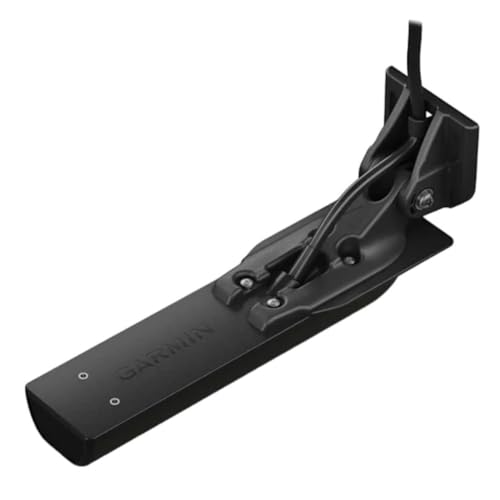
Garmin GT56UHD-TM transom mount transducer
$468.83Ultra high definition ClearVu and SideVu, and the transducer the nine inch ECHOMAP units ship with.
Check price on Amazon
Garmin GT54UHD-TM transom mount transducer
$396.71The 800 kHz ClearVu and SideVu transducer that the seven inch ECHOMAP units carry, and a real upgrade over a GT20.
Check price on Amazon
Garmin GT34UHD-TM transducer
$249.99Ultra high definition scanning without the side imaging element, for a boat where down imaging is what gets used.
Check price on Amazon
Garmin GT23M-TM transducer
$239.99Mid band CHIRP with ClearVu, and the sensible replacement when a stock transducer gets knocked off a trailer.
Check price on Amazon
Garmin Perspective Mount, black
$119.99The heavier duty Garmin perspective mount, for boats where the lighter bracket has been knocked out of alignment once too often.
Check price on Amazon
Garmin Panoptix Perspective Mode Mount
$91.97The genuine perspective mode mount, which is the part the whole LiveScope clone market exists to copy badly.
Check before buying: Buy the genuine part. A live sonar transducer is a four figure item hanging off this bracket in moving water.
Check price on AmazonEvery figure shown is the manufacturer own published specification. The rating on the unit you receive is what governs, and the capacity plate on your own boat governs everything above it.
What each mounting style is for
Each style has a real fit window. A plastic thru-hull housing goes in fiberglass only, never aluminium, and an in-hull mount needs solid fiberglass with no core and no air gap.
Rule of thumb Boating and fishing convention rather than a published standard. Taught everywhere, useful, and not a specification. Nothing enforces it and no body publishes it.
| Style | Where it works | Where it does not |
|---|---|---|
| Transom mount | Most planing hulls with a reasonably flat, unobstructed transom area | Stepped hulls, hulls with strakes or fittings ahead of the mount, and inboards where the running gear disturbs the water |
| Thru hull | Any hull, and the only choice at speed on a deep vee where a transom mount ventilates | Anyone unwilling to cut a hole below the waterline, which is a job with a real consequence for getting it wrong |
| In hull, shooting through | Solid fiberglass hulls with no core and no air gap, glued inside the boat | Cored or aluminum hulls, and any application needing a bottom temperature reading or maximum sensitivity |
| Trolling motor barrel or puck | Bow mounted electric motors, and the standard place for live imaging | Any use while the outboard is running, since the beam points wherever the motor happens to be aimed |
| Kayak scupper mount | Sit on top kayaks with a scupper hole in the right place | Sit inside kayaks, and any hull where the scupper sits outside the water at rest |
The fit windows are general guidance from mount makers rather than a single published standard. Your own transducer and mount both come with a manufacturer fitting instruction, and where those disagree with anything here, theirs governs.
Why a transom mount fails at speed
A transom transducer sits in the water immediately behind the hull, and on a boat at speed that water is full of air. Air does not carry sound the way water does, so the return breaks up and the picture turns to noise the moment the hull gets on plane. That is called ventilating and it is a positioning problem rather than a transducer problem.
The fix is usually to move the transducer sideways out of the prop wash and strakes rather than down. On a deep vee hull that runs fast there frequently is no clean water available behind the transom at all, and that is the point at which a thru-hull stops being an upgrade and becomes the only option.
The hole below the waterline
A thru-hull means cutting a hole in the bottom of the boat, and that is a job with a consequence for getting it wrong. Two rules are not negotiable:
- Plastic housings go in fiberglass hulls only. Never in aluminium, where galvanic corrosion between dissimilar materials is the problem, and never in a cored hull without properly sealing the core.
- The hole is below the waterline. If the installation leaks, it leaks continuously and while nobody is aboard. This is the clearest case on this site for paying somebody who does it every week.
Trolling motor and kayak mounts
A trolling motor barrel or puck is the standard place for live imaging, because the beam points wherever the motor is aimed and that is exactly what forward facing sonar wants. It is useless while the outboard is running, for the same reason.
A kayak scupper mount drops a transducer through an existing hole with nothing drilled and nothing glued, which is the right answer on a sit on top. It only works if the scupper is in a sensible place and if the scupper sits in the water at rest, and it rules out sit inside kayaks entirely. The alternative on a kayak is an arm that swings the transducer over the side and lifts clear for launching, which is the failure point of every fixed kayak mount.
Frequently asked questions
Which transducer mount is best?
There is no single best, because the hull decides. A transom mount is cheapest and works on most planing hulls at moderate speed. A thru-hull is the only mount that reads reliably at speed on a deep vee. An in-hull mount avoids cutting a hole but needs solid fiberglass and gives up sensitivity and bottom temperature. The hull rules some of these out entirely.
Why does my sonar stop working at speed?
The transducer is almost certainly sitting in aerated water. At speed the water immediately behind the hull is full of air, and air does not carry sound the way water does, so the return breaks up. That is called ventilating. The fix is usually moving the transducer sideways out of the prop wash and strakes, or going to a thru-hull.
Can I put a thru-hull transducer in an aluminium boat?
Not a plastic one, and not without following the maker specific instruction for that combination. Galvanic corrosion between dissimilar materials in water is fast on an aluminium hull. Shooting through an aluminium hull does not work either, because aluminium does not pass sound the way solid fiberglass does. Transom or trolling motor mounting is the normal answer.
Does an in-hull transducer work as well?
It loses some sensitivity and it cannot read water temperature at the bottom, because it is glued inside the boat and shooting through the laminate. It needs solid fiberglass with no core and no air gap. Within those limits it works, avoids a hole below the waterline entirely, and cannot be knocked off by a trailer or a log.
Where should live sonar go?
On the trolling motor, almost always. Forward facing sonar needs to point where you are looking, and a bow motor is a pole you can rotate on demand, which is exactly what it wants. The trade is that it does nothing while the outboard is running, and that the mount is holding a four figure transducer in moving water, so genuine hardware matters here.
Do I need a mounting board on a transom?
It is the usual answer on aluminium, where nobody wants more holes in the transom, and it is useful on fiberglass too. A board lets you slide the transducer fore and aft to find clean water without drilling a new set of holes each time, which is exactly the adjustment most installs end up needing.
Get the complete rigging shopping list
Every item in the beginner, intermediate and expert rigs for both a boat and a kayak, with running totals, in one printable list. No charge.
One list, no sequence of daily emails, and you can leave at any time.
Researched, not professional advice. This page is compiled from published engineering and regulatory figures, manufacturer specifications and owner-review consensus, not hands-on testing. Figures described as a rule of thumb are boating convention rather than published standards, and they are labelled that way wherever they appear. Marine electrical work is not house wiring. Use tinned, finely stranded marine cable, size it for voltage drop and for the ABYC E-11 ampacity table rather than one or the other, and put overcurrent protection within seven inches of the battery positive terminal, because everything between the post and the fuse is unprotected. A lithium battery needs a charger with a lithium profile. Never load a boat past its capacity plate, and remember that canoes and kayaks carry no federal capacity plate at all, so their stated capacity is the manufacturer own figure. Wear the life jacket, and treat early season water as the hazard it is: cold water immersion takes your breath and then your hands long before it takes your core.