Sonar and displays
Chartplotter and fish finder screen size calculator
Quick answer
A 9 inch 16:9 display measures about 7.8 inches wide by 4.4 inches tall. The stated size is the diagonal, which is why the width is always well under the number on the box, and why a 9 inch unit fits into less console than people expect.
Every display in this category is sold by its diagonal, and the diagonal is the one dimension that never fits anything. What you need to know is the width and the height, and they fall straight out of the aspect ratio.
One warning before you measure anything: the screen is not the unit. The bezel, the case and the flush mount cutout are all larger than the glass by an amount only the manufacturer own template gives. Use this for a first pass and the maker template before you cut.
Check a unit against your console
A 9 inch 16:9 screen is 7.8 inches wide. Add the bezel and the cutout allowance from the manufacturer template before you measure your console.
| Figure | Value |
|---|---|
| Screen width | 7.8 in |
| Screen height | 4.4 in |
| Screen area | 34.6 sq in |
| Each pane of a three way split | 11.5 sq in |
| Comfortable viewing distance | 2.6 ft, planning figure only |
| Same diagonal at 4:3 | 7.2 by 5.4 in |
Shown with the example figures above. Change any field to run your own numbers.
The working
Published figurefor an aspect ratio of w : h scale = diagonal / sqrt( w^2 + h^2 ) width = w x scale height = h x scale 9 in at 16:9 = 7.8 in wide by 4.4 in tall
Published geometry. The cutout and the case are larger than the glass by an amount only the manufacturer mounting template gives. A published engineering, regulatory or manufacturer figure. It does not change because somebody disagrees with it.
Units and the mounts that hold them
Screen sizes shown are the manufacturer stated diagonals. The case and the flush mount cutout are both larger, and only the maker template gives those dimensions.

Garmin ECHOMAP Ultra 2 126sv
$2,899.99Twelve inches, and the point at which a split screen of live sonar, side imaging and chart is all usable at once rather than a compromise.
Check price on Amazon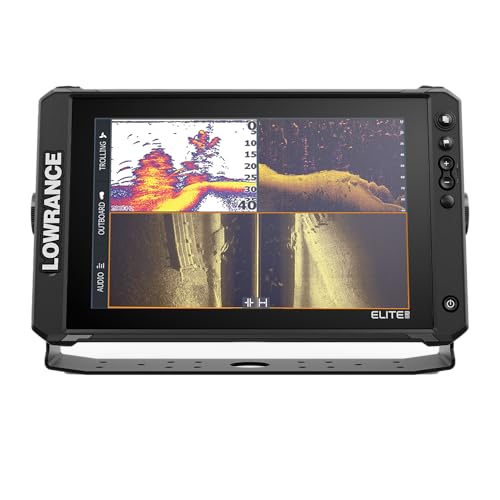
Lowrance Elite FS 12
$2,599.00The largest Elite FS, and the honest alternative to a twelve inch Garmin if you are already on C-MAP.
Check price on Amazon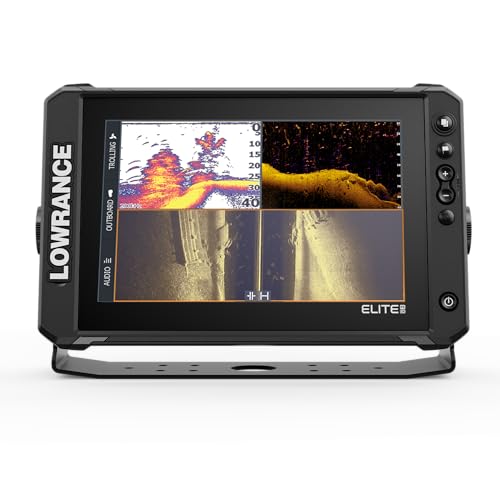
Lowrance Elite FS 10
$1,999.00Ten inches with the same Active Imaging transducer and charts, for a bow where a second big screen earns its space.
Check price on Amazon
Garmin ECHOMAP UHD2 93sv
$1,299.99 Published specsNine inches with a GT56 transducer, which is the ultra high definition transducer rather than the GT54 the smaller units ship with.
Check price on Amazon
Garmin ECHOMAP UHD2 74sv
$1,099.99The coastal chart version of the 73sv, which is the only difference and the one that matters if you fish salt.
Check price on Amazon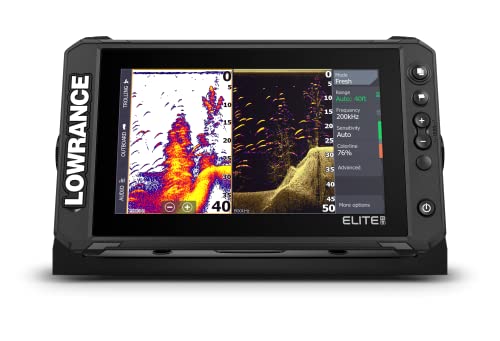
Lowrance Elite FS 9
$1,099.00 Published specsThe nine inch Elite FS, which is the size most bass boats settle on at the console.
Check price on AmazonEvery figure shown is the manufacturer own published specification. The rating on the unit you receive is what governs, and the capacity plate on your own boat governs everything above it.
Every stocked size
A 9 inch 16:9 screen is 7.8 by 4.4 inches. Each step up the range adds roughly the same proportion to both dimensions.
Published figure A published engineering, regulatory or manufacturer figure. It does not change because somebody disagrees with it.
| Stated diagonal | Width | Height | Screen area | Three way split, each pane |
|---|---|---|---|---|
| 4 in | 3.5 in | 2.0 in | 6.8 sq in | 2.3 sq in |
| 5 in | 4.4 in | 2.5 in | 10.7 sq in | 3.6 sq in |
| 6 in | 5.2 in | 2.9 in | 15.4 sq in | 5.1 sq in |
| 7 in | 6.1 in | 3.4 in | 20.9 sq in | 7.0 sq in |
| 9 in | 7.8 in | 4.4 in | 34.6 sq in | 11.5 sq in |
| 10 in | 8.7 in | 4.9 in | 42.7 sq in | 14.2 sq in |
| 12 in | 10.5 in | 5.9 in | 61.5 sq in | 20.5 sq in |
| 16 in | 14.0 in | 7.8 in | 109.4 sq in | 36.5 sq in |
Screen dimensions only. Add the bezel, the bracket and the flush mount cutout allowance from the manufacturer template before measuring your console.
The same diagonal in every aspect ratio
At the same stated diagonal, a 4:3 screen has more area than a 16:9 one, because a square is the most efficient shape for a given diagonal.
Published figure A published engineering, regulatory or manufacturer figure. It does not change because somebody disagrees with it.
| Aspect ratio | Width | Height | Area | What it suits |
|---|---|---|---|---|
| 16:9 | 7.8 in | 4.4 in | 34.6 sq in | Widest, best for chart and side imaging |
| 16:10 | 7.6 in | 4.8 in | 36.4 sq in | A little taller, common on touchscreens |
| 4:3 | 7.2 in | 5.4 in | 38.9 sq in | Tallest, best for vertical sonar traces |
| 5:4 | 7.0 in | 5.6 in | 39.5 sq in | The most area for a given diagonal |
What actually decides what fits
Three things, in this order.
- The cutout, if you are flush mounting. It is larger than the glass and the manufacturer publishes a template with the exact dimensions.
- The depth behind the dash. A nine inch unit with a cable loom and connectors coming out of the back needs several more inches behind it than the case suggests, and this is what most often forces an install to move after it measured fine on the front.
- The swing, if you are bracket mounting. A screen that cannot tilt is a screen you cannot read in the sun.
One big screen or two smaller ones
For split screens, bigger is genuinely better. Below a certain size each pane of a three way split stops being readable at a glance from a standing position at the wheel, which is the position you actually read it from.
Against that: a big screen at the bow is exposed to everything, costs more to replace and on a small boat frequently blocks something you need to see. Two smaller screens often beat one large one, because the decisions get made in two places, at the console when you are running and at the bow when you are fishing, and one screen means walking back to look at it.
Frequently asked questions
How wide is a 9 inch fish finder screen?
About 7.8 inches wide and 4.4 inches tall in 16:9. The 9 inches is the diagonal measurement of the glass, which is why the width is so much less than the stated size. The physical unit is larger again once the bezel, the bracket and the flush mount cutout allowance are counted in.
Is the stated size the screen or the whole unit?
The screen, and specifically its diagonal. The case is always larger and the flush mount cutout larger still. Manufacturers publish a mounting template with exact cutout dimensions for each unit, and that template is what you should measure against rather than any figure calculated from the diagonal, including these.
How much console space do I really need?
More than the screen dimensions suggest, in all three directions. Allow the cutout width and height from the manufacturer template, several inches of depth behind the dash for the cable loom and connectors, and clearance for the unit to tilt if it is on a bracket. The wiring behind the dash forces more installs to move than anything else.
Should I buy one big screen or two smaller ones?
Two smaller screens are often better on a fishing boat, because decisions get made in two places: at the console when running and at the bow when fishing. One large screen means walking back to look at it. The counter argument is that a single large screen splits into three usable panes and two small ones do not.
Does aspect ratio matter?
More than people expect. A wider 16:9 screen shows more chart and suits side imaging, which is a horizontally long picture. A taller 4:3 screen suits a vertical sonar trace and splits more naturally left and right. At the same stated diagonal the 4:3 screen has more area, because a square is the most efficient shape for a given diagonal.
How far away can I read a 9 inch screen?
There is no published figure, because no manufacturer states a recommended viewing distance. Applying the general legibility rule from signage work puts a 9 inch screen somewhere around 6 feet for comfortable reading of typical marine display text. Treat that as a planning number, since character size varies between makers and between screens on the same unit.
Get the complete rigging shopping list
Every item in the beginner, intermediate and expert rigs for both a boat and a kayak, with running totals, in one printable list. No charge.
One list, no sequence of daily emails, and you can leave at any time.
Researched, not professional advice. This page is compiled from published engineering and regulatory figures, manufacturer specifications and owner-review consensus, not hands-on testing. Figures described as a rule of thumb are boating convention rather than published standards, and they are labelled that way wherever they appear. Marine electrical work is not house wiring. Use tinned, finely stranded marine cable, size it for voltage drop and for the ABYC E-11 ampacity table rather than one or the other, and put overcurrent protection within seven inches of the battery positive terminal, because everything between the post and the fuse is unprotected. A lithium battery needs a charger with a lithium profile. Never load a boat past its capacity plate, and remember that canoes and kayaks carry no federal capacity plate at all, so their stated capacity is the manufacturer own figure. Wear the life jacket, and treat early season water as the hazard it is: cold water immersion takes your breath and then your hands long before it takes your core.