Shallow water anchors
Spot-Lock or a shallow water anchor: which one holds your position?
Quick answer
Spot-Lock holds the boat's position by running the trolling motor continuously, which uses battery and makes noise, while a shallow water anchor spikes the boat to the bottom silently and draws almost no power, but only works in roughly 8 to 15 feet of water. Most serious shallow water boats carry both rather than choosing one over the other.

Minn Kota Terrova 55 with GPS and Spot-Lock, 54 inch shaft
$1,649.99 Published specsHolds position anywhere the boat floats by running the motor against wind and current using GPS
Best for: The buy-once bow motor for a single battery freshwater boat
Check price on Amazon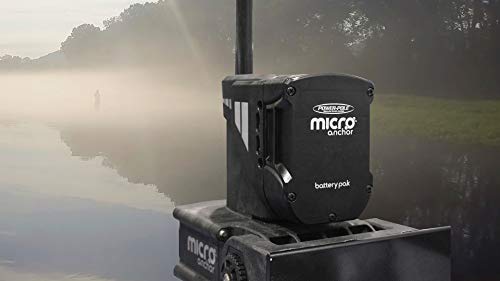
Power-Pole Micro Anchor
$649.99Spikes a lightweight boat to the bottom silently within its depth range, using almost no battery
Best for: Kayaks, skiffs and small bay boats in under about eight feet
Check price on AmazonSpot-Lock and a shallow water anchor solve the same problem, holding a boat still on a spot, in two completely different ways, and neither one makes the other obsolete. Spot-Lock uses GPS to run the trolling motor continuously against wind and current, correcting the boat's position in real time anywhere the water is deep enough to float in. A shallow water anchor does the opposite: it physically spikes into the bottom and holds the boat with no motor running at all, silently and using almost no power, but only where the water is shallow enough for the pole to reach.
The tradeoff is direct. Spot-Lock works at any depth the boat floats in and needs no separate hardware beyond the trolling motor already on the bow, but it draws real current the whole time it is engaged and the prop spinning to hold position is not silent. A shallow water anchor like the Power-Pole Micro or a Minn Kota Talon is close to silent once it is down and uses almost nothing from the battery, but it stops being useful once the water gets much past 15 feet, and it does nothing at all in water too deep for the pole to touch bottom.
That is why most serious shallow water boats run both. Spot-Lock covers open water, deeper structure and anywhere the anchor cannot reach, while the anchor takes over the moment the boat sits shallow enough for it to work, cutting the motor noise and the battery draw for as long as the boat stays there.
On this page
How each one actually holds the boat still
Spot-Lock uses the trolling motor's own GPS receiver to record a position, then runs the motor in short bursts, or continuously in wind and current, to correct any drift away from that point. It is doing real, ongoing work the entire time it is engaged. A shallow water anchor is mechanically simple by comparison: a pole, driven into the bottom by an electric motor, a hydraulic pump or a manual pull rope, that holds the boat in place the same way a spike holds a tent, with no ongoing motor work required once it is down.
Noise, battery draw and depth range compared
A shallow water anchor draws almost no battery once deployed and is close to silent, against Spot-Lock's continuous motor draw, but the anchor only reaches roughly 8 to 15 feet of water depending on the specific model.
Rule of thumb Boating and fishing convention rather than a published standard. Taught everywhere, useful, and not a specification. Nothing enforces it and no body publishes it.
| Spot-Lock | Shallow water anchor | |
|---|---|---|
| Depth range | Any depth the boat floats in | Roughly 8 to 15 feet, model dependent |
| Noise once holding | Motor runs intermittently or continuously | Silent once deployed |
| Battery draw | Ongoing, same draw class as the motor | Minimal once deployed |
| Extra hardware needed | None beyond the trolling motor | A dedicated anchor and its own mount |
Depth range is a general figure across the shallow water anchor category rather than one published spec, since it varies by pole length and model. Check the specific anchor length against your typical fishing depth.
When Spot-Lock is the only one that works
Any water deeper than a shallow water anchor's reach, generally past 15 feet or so, takes Spot-Lock off the shortlist and leaves the motor as the only option that holds position at all. Open water, deep structure fishing, and any spot where the bottom is too far down for even the longest stocked pole to touch are all Spot-Lock's territory by default, since a shallow water anchor simply does not function there.
When the shallow water anchor wins outright
Skinny water sight fishing is the clearest case for the anchor over Spot-Lock: a motor prop spinning continuously to hold position pushes a wake and makes noise that spooky, shallow fish notice, while a deployed pole does neither. It also saves real battery across a long day, since holding position with a spiked anchor costs almost nothing compared to a motor running the whole time you sit on a spot, which matters on a long trip where the trolling motor battery also has to get the boat home.
Running both together
A boat that carries both typically uses the anchor as the default hold in its depth range and falls back to Spot-Lock the moment the water goes deeper than the pole reaches, or when repositioning quickly matters more than staying silent. Neither system replaces the other's specific strength, and running both is standard practice on flats and skinny water boats built around sight fishing rather than a sign of buying twice for the same job.
Which one should you buy first
Buy a shallow water anchor first if you fish shallow water almost exclusively and battery life or stealth matter more than reach. Buy or rely on Spot-Lock first if the water you fish is generally too deep for an anchor to reach, or if the trolling motor and its GPS anchoring is the only system the budget covers this season. Most anglers who fish skinny water seriously end up owning both within a season or two.
Frequently asked questions
How much battery does Spot-Lock actually use compared to a shallow water anchor?
Spot-Lock draws current on the same scale as normal trolling motor operation, since it is running the motor to hold position rather than doing something separate. A shallow water anchor draws a brief burst of current to deploy or retract and then uses almost nothing while holding, which is why anglers who sit on shallow spots for long periods often see it as the better battery choice for that specific job.
What is the maximum depth a shallow water anchor works in?
It depends on the specific model's pole length, with most stocked anchors reaching somewhere in the 8 to 15 foot range. A longer pole reaches deeper water but is also heavier and more expensive, so match the anchor's stated length to the depths you actually fish rather than buying the longest one available by default.
Does Spot-Lock work in water too shallow for a shallow water anchor?
Yes, Spot-Lock works at any depth the boat can float in, including water shallower than an anchor's minimum useful range where the pole would bottom out awkwardly or the boat sits too high for it to deploy properly. The tradeoff is the same one that applies everywhere else: motor noise and battery draw against the anchor's silence.
Can I use Spot-Lock and a shallow water anchor at the same time?
There is little reason to run both simultaneously since either one alone holds the boat still, but having both installed lets you switch between them as conditions change, using the anchor in its depth range for stealth and battery savings and switching to Spot-Lock the moment you move to water the anchor cannot reach.
Is a shallow water anchor worth it if I already have Spot-Lock?
For anyone who spends real time in water shallow enough for the anchor to reach, generally yes, mainly for the noise and battery savings over letting the motor run continuously. For a boat that mostly fishes deeper water where the anchor cannot reach anyway, Spot-Lock alone covers the job and an anchor would rarely get used.
Does a shallow water anchor work on a kayak or a small boat?
Smaller anchors built for lighter craft exist, such as the Power-Pole Micro, which is sized and priced for a kayak, skiff or small bay boat rather than a full size bass boat. Match the anchor's weight, mount and holding power to the boat it is going on, since a large anchor built for a heavy flats boat is the wrong choice for a light hull.
Get the complete rigging shopping list
Every item in the beginner, intermediate and expert rigs for both a boat and a kayak, with running totals, in one printable list. No charge.
One list, no sequence of daily emails, and you can leave at any time.
Researched, not professional advice. This page is compiled from published engineering and regulatory figures, manufacturer specifications and owner-review consensus, not hands-on testing. Figures described as a rule of thumb are boating convention rather than published standards, and they are labelled that way wherever they appear. Marine electrical work is not house wiring. Use tinned, finely stranded marine cable, size it for voltage drop and for the ABYC E-11 ampacity table rather than one or the other, and put overcurrent protection within seven inches of the battery positive terminal, because everything between the post and the fuse is unprotected. A lithium battery needs a charger with a lithium profile. Never load a boat past its capacity plate, and remember that canoes and kayaks carry no federal capacity plate at all, so their stated capacity is the manufacturer own figure. Wear the life jacket, and treat early season water as the hazard it is: cold water immersion takes your breath and then your hands long before it takes your core.