Batteries and charging
Lithium or lead acid for your trolling motor battery?
Quick answer
A 100 Ah LiFePO4 battery delivers close to its full rated capacity at a heavy trolling motor draw, while a 100 Ah AGM battery does not. The gap comes from the Peukert exponent: 1.02 for lithium against 1.15 to 1.25 for lead acid, plus a conventional 80 percent usable depth of discharge on lithium against 50 percent on lead acid.
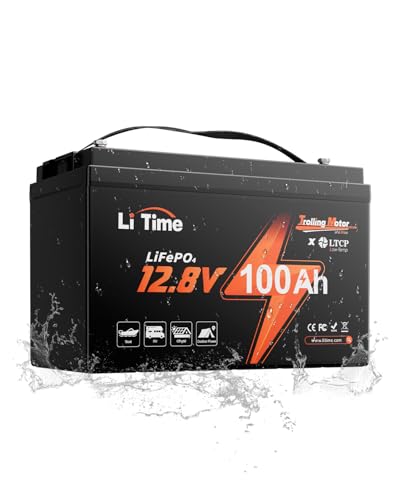
LiTime 12V 100Ah trolling motor LiFePO4 battery
$335.99 Published specsDelivers close to its full rated capacity at trolling motor draw and needs no watering or equalizing
Best for: A 55 lb thrust 12 volt motor on a boat that fishes full days
Check price on Amazon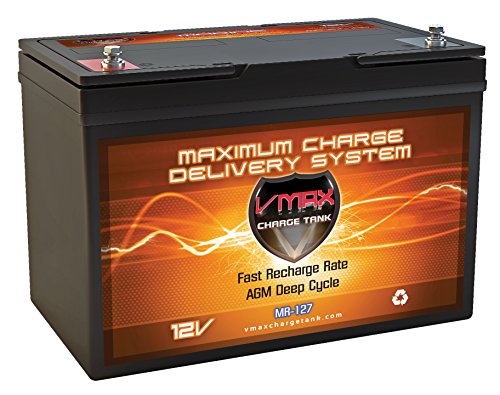
VMAX MR127 12V 100Ah AGM deep cycle battery
$259.96 Published specsA third the price of the equivalent lithium pack at the same rated capacity, at roughly triple the weight
Best for: A conventional trolling motor bank where the budget rules out lithium
Check price on AmazonLithium is the better trolling motor battery for anyone who runs a motor hard enough to actually notice the fuel gauge move, because a LiFePO4 pack gives up almost none of its rated capacity at a heavy draw and a lead acid battery gives up a lot of it. Lead acid still wins on the sticker price, and for a boat that trolls for an hour or two a trip on a lake with no wind, that lower up front cost can be the whole decision.
The reason the two chemistries behave so differently under load is Peukert's equation, which is published battery engineering rather than a marketing claim. It describes how a battery's usable capacity falls as the discharge current rises above the twenty hour rate its amp hour figure was measured at. Lead acid falls hard. Lithium barely falls at all. Add in how much of that already reduced capacity you are supposed to actually use before recharging, and the two 100 Ah batteries in this comparison are not delivering anywhere near the same number of usable amp hours on the water.
None of that makes lead acid the wrong choice. It makes lithium the wrong choice to buy without doing the run time math first, and lead acid the wrong choice to buy without a plan for its weight and its shorter service life.
On this page
- Why the same amp hour rating does not mean the same battery
- The depth of discharge guideline is a different kind of number
- What that actually looks like at a real motor draw
- Weight is the other half of the argument
- Charging is where lithium buyers get burned
- What about Dakota Lithium and Battle Born?
- Which one should you actually buy
Why the same amp hour rating does not mean the same battery
Every deep cycle battery's printed amp hour number is measured at what is called the twenty hour rate: discharge it slowly enough that it takes twenty hours to empty, and you get the full rated capacity. A trolling motor rarely draws at that gentle a rate. Draw current faster than that and Peukert's equation predicts how much less capacity you actually get, and the exponent that drives the equation is chemistry dependent rather than one size fits all.
The published Peukert exponent for LiFePO4 is 1.02, against 1.15 for AGM and 1.25 for flooded lead acid, which is why lithium barely loses capacity at a heavy trolling motor draw and lead acid loses a great deal of it.
Published figure A published engineering, regulatory or manufacturer figure. It does not change because somebody disagrees with it.
| Chemistry | Peukert exponent | What it means at a heavy draw |
|---|---|---|
| LiFePO4 lithium | 1.02 | Delivers close to its full rated capacity even at high current |
| AGM lead acid | 1.15 | Noticeably less than rated capacity at a heavy motor draw |
| Flooded lead acid | 1.25 | The largest capacity loss of the three at the same draw |
The exponent is published battery engineering. It does not change by brand within a chemistry.
The depth of discharge guideline is a different kind of number
Peukert's equation tells you how much capacity the battery actually delivers. Depth of discharge tells you how much of that delivered capacity you should plan on using before you plug in a charger, and the two numbers below are convention rather than a published specification. Fifty percent on lead acid exists to protect cycle life: draining a flooded or AGM battery further than that shortens how many times it can be recharged. Eighty percent on lithium is the conservative planning figure repeated across lithium marketing and forums, not a number stamped on a datasheet by a standards body.
The conventional depth of discharge is 50 percent for lead acid and 80 percent for LiFePO4, which roughly doubles the usable capacity difference on top of the Peukert gap above.
Rule of thumb Boating and fishing convention rather than a published standard. Taught everywhere, useful, and not a specification. Nothing enforces it and no body publishes it.
| Chemistry | Conventional usable depth | Why it is set there |
|---|---|---|
| LiFePO4 lithium | 80 percent | Conservative planning figure repeated across the lithium market |
| AGM or flooded lead acid | 50 percent | Protects cycle life; draining further shortens the battery |
This is boating and battery community convention, not a manufacturer specification or a regulatory figure.
What that actually looks like at a real motor draw
Run both numbers through the published Peukert formula at a 40 amp draw, which is a realistic continuous pull for a mid size bow mount motor at a working speed, and the gap stops being abstract. A 100 Ah AGM battery at that draw delivers roughly 73 amp hours before the battery is meaningfully depleted, and the 50 percent depth of discharge guideline says stop using it well before that point, near 37 amp hours delivered. A 100 Ah LiFePO4 pack at the same 40 amp draw delivers close to 96 amp hours, and the 80 percent guideline allows using around 77 of them. That is roughly double the usable capacity from batteries with the identical rated number on the label. Run your own motor's published maximum current draw and your own trip length through the battery runtime calculator rather than trusting either figure blind, because your own draw is a vessel figure the manufacturer's amp hour rating never claimed to predict on its own.
Weight is the other half of the argument
The LiTime 12V 100Ah LiFePO4 weighs about 22 lb. A 12 volt AGM in the same capacity class, such as the VMAX MR127, is built with lead plates and glass mat separator and comes in dramatically heavier, though the exact figure is the specific battery's own published weight rather than a number this comparison invents. On a boat carrying two or three batteries for a 24 or 36 volt bank, that difference compounds into real trim and payload, which matters more on a small boat than a large one. It is also the entire argument for lithium on a kayak, where a battery has to be carried to and from the water on every trip rather than left permanently in a compartment.
Charging is where lithium buyers get burned
A lithium battery needs a charger with a lithium profile. A lead acid charging profile ends its cycle in an absorption and float stage at a voltage that is wrong for LiFePO4: it either never reaches the bulk voltage the pack actually needs to fill, or it holds the pack at a float voltage it should never sit at for hours at a time. The Minn Kota MK-220PCL and every NOCO GENPRO onboard charger in this catalog include a selectable lithium mode per bank for exactly this reason. If you are switching a bank from lead acid to lithium, check that your existing charger has that setting before you plug the new battery into it, not after.
What about Dakota Lithium and Battle Born?
Two of the best known names in marine lithium, Dakota Lithium and Battle Born, are not sold through this catalog. Searching for either brand on Amazon returns clones and unrelated listings rather than the genuine product, which is worse than not linking one at all. If a specific one of those brands is what you want, buy it directly from the manufacturer's own site and use the Peukert and depth of discharge figures above to judge it against LiTime, Renogy or ECO-WORTHY packs sold here instead.
Which one should you actually buy
Buy lithium if the motor runs more than an hour or two at a stretch, if the battery has to be carried rather than left in the boat, or if the bank will still be in service in five years and the higher cycle count needs to pay that price back. Buy lead acid if the budget rules lithium out this season, if the boat already has a working AGM bank with life left in it, or if the charger on hand has no lithium profile and buying one is not in the plan yet.
Frequently asked questions
Does lithium really deliver twice the usable capacity of AGM at the same amp hour rating?
Roughly, at a heavy draw. Run the published Peukert exponents through the numbers at a 40 amp trolling motor draw and a 100 Ah LiFePO4 pack delivers close to its full rated capacity, with 80 percent of that considered usable. A 100 Ah AGM battery delivers noticeably less at the same draw, and the 50 percent depth of discharge guideline halves it again. The gap narrows at a light draw and widens at a heavy one.
Can I put one lithium battery in place of my three 12 volt AGM batteries without rewiring?
Only if you buy a 36 volt LiFePO4 pack rated for the motor, not a 12 volt lithium battery. A single 36 volt lithium pack replaces the series wired trio directly at the motor's plug, but the charger, the fuse or breaker sizing and the cable gauge all need checking against the new pack's own published specifications rather than assumed to carry over from the old lead acid bank.
What charger do I need for a lithium trolling motor battery?
A charger with a selectable lithium or LiFePO4 profile, either as a dedicated lithium charger or as one selectable mode on a multi bank onboard charger. A lead acid profile is not simply less efficient on lithium, it either never reaches the bulk voltage the pack needs to fill or holds it at a float voltage the pack should not sit at, which shortens its life.
Is AGM ever the better choice over lithium?
Yes, mainly on price and on a boat that only trolls lightly. AGM costs roughly a third of an equivalent lithium pack up front, needs no charger upgrade, and is the lower risk choice for anyone unsure they will keep the boat long enough to earn back lithium's higher purchase price through its longer cycle life and lighter weight.
How many years does a lithium trolling motor battery actually last compared to AGM?
Manufacturers commonly publish 4,000 or more cycles at 100 percent depth of discharge for LiFePO4, against roughly 300 to 700 cycles at 50 percent depth of discharge for AGM depending on the specific model. Real world seasons vary with how deeply and how often the battery is cycled, so treat any specific year count as a rough conversion from the published cycle figures rather than a guarantee.
Do I need a different fuse or breaker for a lithium battery than for lead acid?
The overcurrent device is sized to the conductor and the motor's published maximum draw, not to the battery chemistry, so a correctly sized fuse or breaker for the lead acid bank generally still fits the lithium replacement at the same voltage and thrust rating. What does change is the charger profile, which must support lithium specifically, and the battery's own internal BMS, which adds a second layer of protection lead acid does not have.
Get the complete rigging shopping list
Every item in the beginner, intermediate and expert rigs for both a boat and a kayak, with running totals, in one printable list. No charge.
One list, no sequence of daily emails, and you can leave at any time.
Researched, not professional advice. This page is compiled from published engineering and regulatory figures, manufacturer specifications and owner-review consensus, not hands-on testing. Figures described as a rule of thumb are boating convention rather than published standards, and they are labelled that way wherever they appear. Marine electrical work is not house wiring. Use tinned, finely stranded marine cable, size it for voltage drop and for the ABYC E-11 ampacity table rather than one or the other, and put overcurrent protection within seven inches of the battery positive terminal, because everything between the post and the fuse is unprotected. A lithium battery needs a charger with a lithium profile. Never load a boat past its capacity plate, and remember that canoes and kayaks carry no federal capacity plate at all, so their stated capacity is the manufacturer own figure. Wear the life jacket, and treat early season water as the hazard it is: cold water immersion takes your breath and then your hands long before it takes your core.