Anchoring
How much anchor rode do you need in 40 feet of water at 7 to 1?
Quick answer
Anchoring in 40 feet at 7 to 1 scope needs about 294 feet of rode, counting a 2 foot bow roller height. Add 3 feet of tide still to come in and it becomes 315 feet, and leaving the tide out is why an anchor that held at slack water drags later.
Scope is the ratio of rode paid out to the vertical distance from the bow roller to the bottom, and that is depth plus bow height plus whatever tide is still coming. Measuring scope from the depth sounder reading alone is the mistake, because a sounder measures from the transducer down, not from the bow roller.
The reason scope matters is angle. An anchor holds by burying itself, and it only buries if the pull on it is close to horizontal. Short scope pulls the shank upward and the anchor skips rather than setting, which is what dragging actually is.
On this page
Rode needed in 40 feet
In 40 feet with a 2 foot bow roller, 7 to 1 scope needs 294 feet of rode, and 7 to 1 needs 294 feet.
Rule of thumb Boating and fishing convention rather than a published standard. Taught everywhere, useful, and not a specification. Nothing enforces it and no body publishes it.
| Scope | When it is used | Rode needed | With 3 ft of tide |
|---|---|---|---|
| 3 to 1 | All chain, settled conditions, somebody aboard | 126 ft | 135 ft |
| 5 to 1 | Daytime, light wind, watching it | 210 ft | 225 ft |
| 7 to 1 | Overnight or unattended, rope rode | 294 ft | 315 ft |
| 10 to 1 | Heavy weather | 420 ft | 450 ft |
Scope ratios are seamanship convention rather than a published standard. Nothing enforces them and no body publishes them, and local conditions and bottom type matter as much as the ratio.
7 to 1 at other depths
Rode requirement grows linearly with depth, so doubling the water doubles the rode, and the bow height matters proportionally more in shallow water.
Rule of thumb Boating and fishing convention rather than a published standard. Taught everywhere, useful, and not a specification. Nothing enforces it and no body publishes it.
| Depth | Vertical distance | Rode at 7 to 1 | Rode at 7 to 1 |
|---|---|---|---|
| 5 ft | 7 ft | 49 ft | 49 ft |
| 8 ft | 10 ft | 70 ft | 70 ft |
| 10 ft | 12 ft | 84 ft | 84 ft |
| 12 ft | 14 ft | 98 ft | 98 ft |
| 15 ft | 17 ft | 119 ft | 119 ft |
| 20 ft | 22 ft | 154 ft | 154 ft |
| 25 ft | 27 ft | 189 ft | 189 ft |
| 30 ft | 32 ft | 224 ft | 224 ft |
| 40 ft | 42 ft | 294 ft | 294 ft |
| 50 ft | 52 ft | 364 ft | 364 ft |
Why the chain matters as much as the length
A length of chain between the anchor and the rope does two jobs that rope cannot. It keeps the pull on the anchor shank horizontal at the seabed, which is what lets the anchor bury, and it absorbs shock loading as the boat surges rather than snatching the anchor out.
That is why all chain rodes can hold at 3 to 1 where a rope rode wants 7 to 1: the weight of the chain is doing part of what scope does. On a small boat with a mostly rope rode, a few feet of chain at the anchor end is the single cheapest improvement to holding you can make.
The part people leave out
7 to 1 is used for overnight or unattended, rope rode. Three things get left out of the vertical distance and each one shortens your real scope:
- Bow height. The rode leaves the boat at the bow roller, not at the waterline, and on most small boats that is 2 to 4 feet.
- Tide still to come. Anchoring at low water and leaving at high water can add several feet of depth without anybody touching anything.
- The sounder offset. A depth sounder reads from the transducer down and not from the surface, so in shallow water it is understating the vertical distance by the draft.
An anchor that held perfectly in the afternoon and dragged at three in the morning has usually not moved. The tide has.
Scope
Rule of thumbvertical distance = depth + bow height + tide still to come = 40 + 2 + 0 = 42 ft rode = vertical distance x scope ratio = 42 x 7 = 294 ft
Scope ratios are seamanship convention. Bottom type, wind, current and the anchor design all matter alongside them.
Anchors, rode and holding gear
Chosen against the numbers on this page rather than from a general list, so the recommendation cannot contradict the arithmetic above. Every figure quoted is the manufacturer own published specification.

Better Boat 13 lb anchor kit with 100 ft rope and 8 ft chain
$125.99 Published specsAnchor, chain and rode in one purchase, with enough chain to actually set the fluke rather than lift it.
Check price on Amazon
Lewmar anchor rode, 5 ft chain and 100 ft rope with shackle
$207.95A spliced windlass rode from a ground tackle manufacturer, which is the part of the system nobody should be improvising.
Check price on Amazon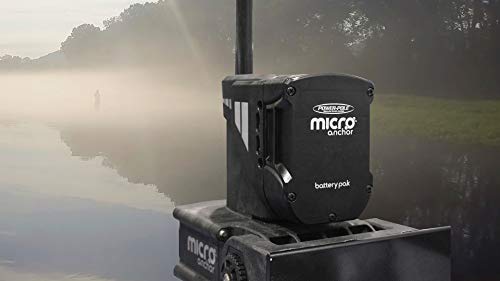
Power-Pole Micro Anchor
$649.99The smallest and cheapest genuine shallow water anchor, light enough for a kayak or a skiff and the entry point to the category.
Best for: Kayaks, skiffs and small bay boats in under about eight feet
Check price on Amazon
Power-Pole Micro battery pack and charger
$199.99The Micro needs its own power, and on a kayak that means this pack rather than running a cable to a main battery.
Check price on Amazon
Power-Pole Pro Series II shallow water anchor, 4 ft
$1,649.99The hydraulic Power-Pole that the flats boat world runs on, and considerably quieter into the water than a spike driven by a screw.
Check price on Amazon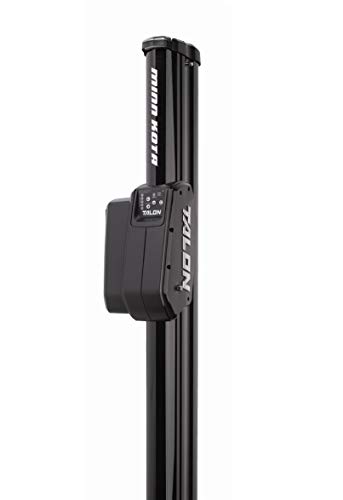
Minn Kota Talon shallow water anchor, 10 ft
$1,843.99Ten feet of reach and a Minn Kota that talks to the rest of the Minn Kota system, including auto deploy from Spot-Lock.
Check price on AmazonHow we chose
We did not test this equipment in person and we never claim to. Picks are researched from manufacturer specification sheets, published engineering and regulatory figures, and the recurring themes in verified owner reviews. Every pick is matched to a real thrust rating, a real published amp draw, a real capacity or a real conductor size rather than to a price bracket, and it is placed in the tier where its published capability actually belongs. We rejected the unbranded flood that dominates several of these search results, because a lithium pack whose management board is the only thing between a cell fault and a fire, a breaker protecting a battery cable, a life jacket and a bracket holding a two thousand dollar motor to the bow at highway speed are all parts whose failure has a consequence nobody can walk away from. Where a figure is convention rather than a published standard we label it that way, and where a manufacturer does not publish a figure we leave it out instead of estimating it.
Frequently asked questions
How much rode do I need in 40 feet of water?
At 7 to 1 scope, about 294 feet, counting a 2 foot bow roller height on top of the 40 feet of water. At the more usual overnight figure of 7 to 1 it is 294 feet. Add whatever tide is still to come in before you work it out, because that is the part most commonly left out.
What is scope and why does it matter?
Scope is the ratio of rode paid out to the vertical distance from the bow roller to the bottom. It matters because an anchor holds by burying itself, and it only buries when the pull on its shank is close to horizontal. Short scope lifts the shank and the anchor skips along the bottom instead of setting, which is what dragging actually is.
Is 7 to 1 really necessary?
For overnight, unattended, or any weather, yes, and it is the figure every seamanship text repeats. For a lunch hook in settled conditions with somebody aboard watching, 5 to 1 is normal and 3 to 1 works with an all chain rode. None of these is a published standard: they are convention, and bottom type and conditions matter alongside them.
Does the chain change how much rode I need?
Yes, substantially. Chain weight holds the pull on the anchor shank horizontal at the seabed and absorbs the shock of the boat surging, which is part of what scope otherwise has to do. That is why an all chain rode can hold at 3 to 1 where a rope rode wants 7 to 1, and why a few feet of chain at the anchor end is the cheapest holding improvement on a small boat.
Why did my anchor hold and then drag later?
Almost always the tide. Anchoring at low water and sitting through a rising tide increases the vertical distance without anybody touching the rode, so the scope you set quietly shrinks. A 3 foot rise in 40 feet takes 7 to 1 scope down to roughly 6.5 to 1. Wind shifting the boat onto a different lie is the other common cause.
Should I use a shallow water anchor instead?
In 40 feet a pole anchor has run out of reach. They top out somewhere between eight and fifteen feet depending on the model, so conventional ground tackle is the answer at this depth, and a GPS anchor lock on the trolling motor is the other option if the boat has one.
Get the complete rigging shopping list
Every item in the beginner, intermediate and expert rigs for both a boat and a kayak, with running totals, in one printable list. No charge.
One list, no sequence of daily emails, and you can leave at any time.
Researched, not professional advice. This page is compiled from published engineering and regulatory figures, manufacturer specifications and owner-review consensus, not hands-on testing. Figures described as a rule of thumb are boating convention rather than published standards, and they are labelled that way wherever they appear. Marine electrical work is not house wiring. Use tinned, finely stranded marine cable, size it for voltage drop and for the ABYC E-11 ampacity table rather than one or the other, and put overcurrent protection within seven inches of the battery positive terminal, because everything between the post and the fuse is unprotected. A lithium battery needs a charger with a lithium profile. Never load a boat past its capacity plate, and remember that canoes and kayaks carry no federal capacity plate at all, so their stated capacity is the manufacturer own figure. Wear the life jacket, and treat early season water as the hazard it is: cold water immersion takes your breath and then your hands long before it takes your core.